What Is Japanese Dagashi?
If you’ve ever walked through a small Japanese neighborhood, visited a local festival, or watched an anime where children gather around a tiny snack shop, you may have noticed colorful, playful sweets known as dagashi.
Dagashi are traditional Japanese snacks created primarily for children. They are inexpensive, simple, and deeply connected to everyday life and childhood memories in Japan. Unlike premium sweets made for adults, dagashi were designed so that children could buy them easily with their pocket money — often for just 10 to a few dozen yen per piece.
Many people in Japan still remember headlines like “A popular dagashi snack goes up by 3 yen and now costs 15 yen.” This kind of news may sound surprising, but it reflects how deeply dagashi are associated with affordability and childhood.
Today, dagashi are gaining renewed attention overseas — not only as nostalgic snacks, but as cultural artifacts that reflect Japan’s social history, creativity, and strong sense of community.
What Does “Dagashi” Mean?
The word dagashi (駄菓子) is made up of two kanji characters:
- da (駄): cheap, simple, ordinary
- kashi (菓子): sweets or snacks
At first glance, the character 駄 may seem negative, as it can also mean “low value” or “inferior.” However, in the context of dagashi, it does not mean “bad quality.”
Instead, the word was used to distinguish everyday children’s snacks from expensive, high-end sweets, known as jōgashi (上菓子), which were made with refined white sugar and enjoyed mainly by adults.
Dagashi, by contrast, represented something humble, affordable, and accessible — sweets for ordinary people and, above all, for children.
The term “dagashi” is believed to have become common during the Meiji period, when this contrast between luxury sweets and inexpensive snacks became more clearly defined.
The Birth of Dagashi: A Snack for Every Child
The roots of dagashi can be traced back to the Edo period (1603–1868), a time when social class and access to food were clearly divided.
Rice-based sweets were considered luxury items, and refined white sugar was rare and expensive. For most ordinary people, sweetness came from brown sugar (kurozatō) or starch syrup (mizuame).
As a result, early dagashi were made using inexpensive and readily available ingredients, such as:
- Barley, millet, and other grains
- Broken or leftover rice
- Brown sugar and syrup instead of white sugar

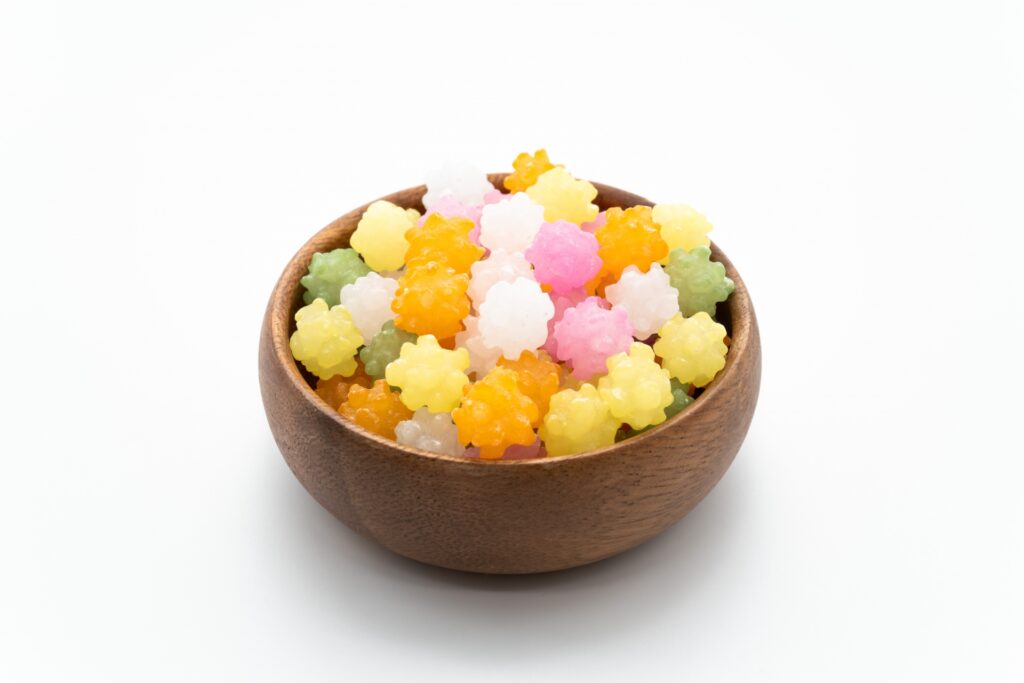

These simple snacks were sold for about one mon, a small unit of currency roughly equivalent to a few dozen yen today. Because of this, they were once known as “ichimon-gashi” (one-mon sweets) or later “issen-gashi” (one-sen sweets) as Japan’s currency system evolved.
Despite their low price, these snacks brought joy. Children could buy them at dagashi-ya — small neighborhood snack shops — where sweets were displayed openly and sold one by one.
Dagashi-ya were more than stores. They were social spaces, where children gathered after school, chose snacks carefully with limited coins, enjoyed small surprises like lottery prizes or bonus treats, and built friendships.
The philosophy behind dagashi was never luxury — it was fun, creativity, and shared experience.
Key Characteristics of Japanese Dagashi
Over time, dagashi developed several defining features that still remain today:
- Affordable: Usually priced at 10 yen to a few dozen yen
- Made with simple ingredients: Often using grains, syrup, and brown sugar rather than refined materials
- Designed for children: Sweet, soda, strawberry, or savory flavors children love
- Playful elements: Lottery prizes, “winner” sticks, collectible packaging
- Deeply nostalgic: Closely tied to memories of childhood and local communities
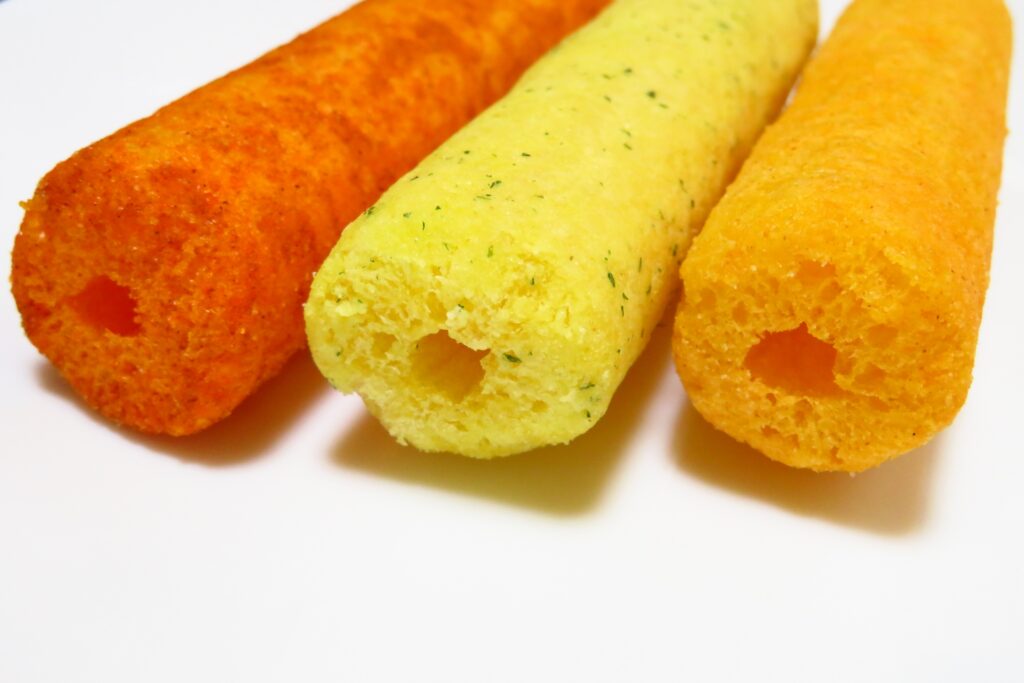
Famous examples include Umaibo, Baby Star Ramen, karintō, and sauce-flavored yakisoba-style snacks — each reflecting creativity within strict cost limits.
###
Types of Dagashi: A World of Variety Beyond Candy
Although often grouped under one name, dagashi come in an astonishing variety of forms.
Early dagashi were made by mixing grains such as beans or barley with brown sugar or starch syrup, then shaping, hardening, or baking them. Classic examples include:
- Kinako mochi (soybean flour sweets)
- Okoshi (puffed grain bars)
- Anko-dama (sweet red bean paste balls)
- Karume-yaki (traditional honeycomb-like candy)
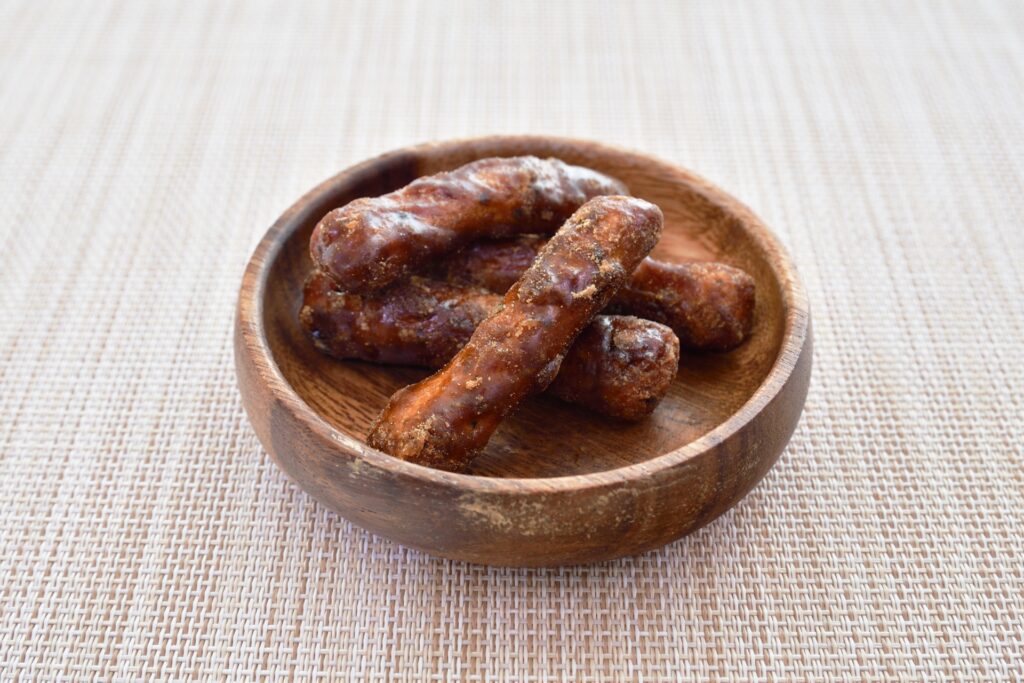
- Karin-tō (deep-fried brown sugar dough sticks)
As Japan entered the modern era, things began to change. Chocolate was introduced during the Edo period, and the Meiji era’s modernization and Western influence brought new lifestyles — and new snacks.
Gum, gummies, and Western-style sweets gradually joined the world of dagashi. With the rise of mechanized production, dagashi became even more diverse, and toy bonuses became an essential part of the experience.
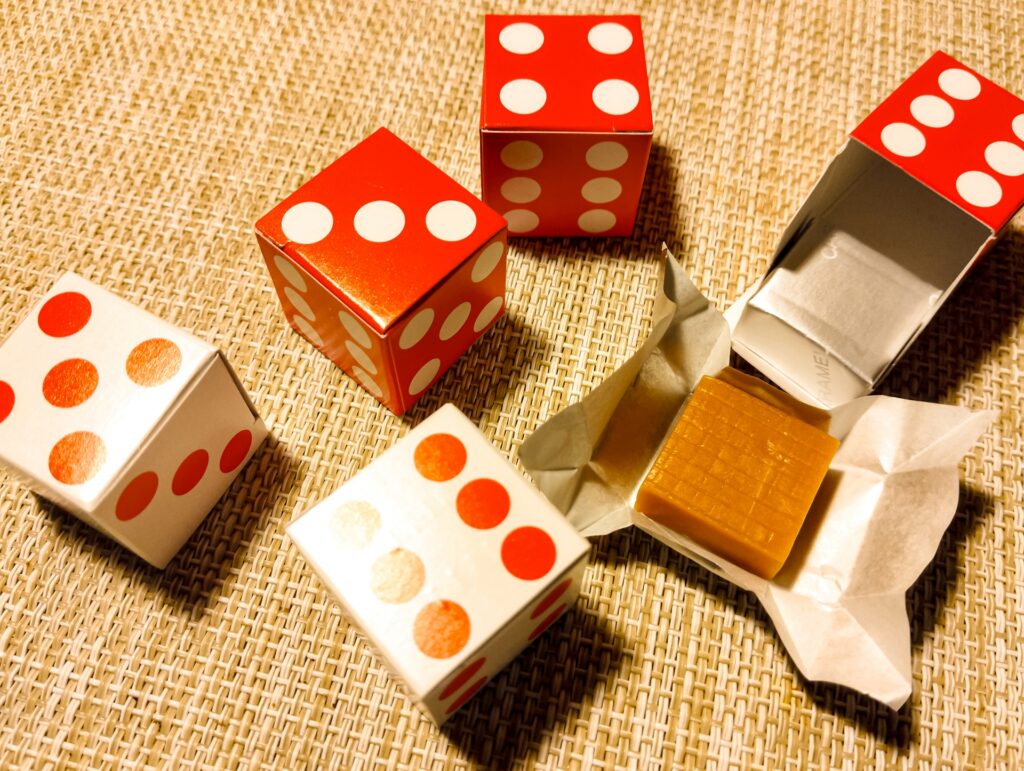
One particularly iconic example is caramel. In the early Shōwa period, caramel snacks with bonus toys became extremely popular. After World War II, more than 100 manufacturers were producing caramel products, each competing to create more inventive prizes. Even today, caramel remains one of the most recognizable forms of dagashi.
Common Types of Dagashi Today
- Ramune candies, gummies, hard candies, and jelly sweets
- Snack foods (such as Umaibo and Baby Star Ramen)
- Chocolate and biscuits
- Lottery-style snacks with prizes
- Snacks that include toys
- Sour or spicy dagashi for adventurous tastes
Each type offers not just flavor, but a sense of excitement and discovery — the heart of dagashi culture.
Dagashi-ya: More Than a Shop — A Community Space
A dagashi-ya is a small retail shop that sells dagashi and inexpensive toys, primarily for children. In the past, these shops were found in nearly every neighborhood and served as much more than places to buy snacks—they were social hubs.
Children gathered at dagashi-ya after school, clutching their allowances, learning how to count money, choose between treats, and interact with adults. In this sense, dagashi-ya functioned as informal classrooms where children experienced their first lessons in economics, communication, and social rules.
For communities, dagashi-ya played a vital role:
- For children
- Learning social skills and money management through small purchases
- Interacting with older shopkeepers and children of different ages
- Having a safe, welcoming place to spend time after school
- For communities
- Acting as a “third place” beyond home and school
- Connecting generations and fostering informal care for children
- Preserving local culture and human warmth
Although traditional dagashi-ya has declined due to urbanization, fewer children, and rising costs, their social value is being rediscovered today.
Dagashi and Anime: Why Japanese Snacks Appear So Often on Screen
Dagashi are not only part of everyday life in Japan — they are also deeply woven into Japanese anime and manga.
Because dagashi are inexpensive, nostalgic, and strongly associated with childhood and everyday moments, creators often use them to add warmth, humor, and personality to their characters.
In anime and manga, a character’s choice of snack can quietly reveal who they are:
their values, their quirks, and sometimes even their emotional vulnerabilities. Dagashi, with their playful packaging and long history, are perfect storytelling tools.
Famous Dagashi-Loving Characters in Anime & Manga
Over the years, many well-known characters have been portrayed as devoted dagashi lovers:
- Hotaru Shidare (Dagashi Kashi)
The passionate heroine of Dagashi Kashi, Hotaru is the daughter of a major snack company’s president. Her encyclopedic knowledge of dagashi and her almost obsessive love for traditional snacks turn everyday sweets into fascinating cultural lessons. Through her character, dagashi are treated not as “cheap candy,” but as cultural treasures. https://en.wikipedia.org/wiki/Dagashi_Kashi - Edogawa Ranpo (Bungo Stray Dogs)
Known for his brilliant deductive mind, Ranpo is also a notorious sweet lover. He is often seen eating dagashi — sometimes obsessively focusing on sweet bean paste alone. This contrast between genius detective work and childish snacking adds charm and humor to his character. https://en.wikipedia.org/wiki/Bungo_Stray_Dogs - Gintoki Sakata (Gintama)
One of anime’s most famous “sweet tooth” characters, Gintoki practically runs on sugar. Strawberry milk, parfaits, and anko-based sweets are essential to his survival. His love of simple sweets mirrors his laid-back personality and emotional honesty beneath the comedy. https://en.wikipedia.org/wiki/Gintama - Beniko (Fushigi Dagashi-ya Zenitendo)
The mysterious owner of a magical dagashi-ya, Beniko offers customers the exact dagashi they need — sometimes with unexpected consequences. In this series, dagashi are not just snacks but symbolic items tied to fate, desire, and life lessons, reinforcing their cultural significance. https://en.wikipedia.org/wiki/Fushigi_Dagashi-ya_Zenitend%C5%8D
These characters show how dagashi function as more than food. They represent comfort, memory, humor, and sometimes even moral choice.
From Anime Classics to Greek Childhood Memories: Kabamaru and Yakisoba
For many Greek anime fans, dagashi-related nostalgia connects to Iga no Kabamaru, a beloved anime from the 1980s and 1990s.
In Greece, the anime Iga no Kabamaru became incredibly popular during the 1980s and 1990s.
Kabamaru is famous for:
- His wild personality
- His ninja background
- And most memorably… his endless appetite
One of Kabamaru’s favorite foods is yakisoba (fried noodles) — a dish that perfectly represents hearty, comforting Japanese street food. https://el.wikipedia.org/wiki/Igano_Kabamaru
Yakisoba-Flavored Dagashi: Anime Nostalgia in Snack Form
Yakisoba-inspired dagashi recreate the rich, savory flavor of Japanese fried noodles using:
- Sweet-and-savory sauce powder
- Corn or wheat-based snacks
- Crunchy textures
For Greek fans who grew up watching Kabamaru, these snacks offer:
- A taste of anime nostalgia
- A cultural bridge between childhood memories and real Japanese food
This is one reason yakisoba-flavored dagashi resonate strongly with Greek audiences today.
Is Dagashi Disappearing?
- Challenges, Decline, and New Paths Forward -
Today, the world of dagashi is facing serious challenges in Japan.
Several long-term social and economic changes have placed the industry under significant pressure.
One major issue is Japan’s declining birthrate. With fewer children than in past generations, the core customer base for dagashi has naturally shrunk. At the same time, convenience stores, supermarkets, and discount shops have replaced many traditional dagashi-ya as the main places where snacks are purchased.
The decline is striking.
In the early 1970s, Japan had more than 130,000 dagashi-ya across the country. By 2021, that number had fallen to around 6,000, a decrease of over 90 percent.
Another challenge lies in economics. Dagashi have always been low-priced products with very small profit margins, relying on high sales volume to survive. However, in recent years, rising costs of raw materials, packaging, energy, and logistics have made this model increasingly difficult. Many manufacturers have been forced to raise prices by just a few yen — a change that often becomes national news precisely because dagashi are expected to remain so affordable.
The industry is also struggling with aging shop owners, manufacturers, and wholesalers, combined with a severe lack of successors. As older owners retire, many shops and small factories simply close. Some classic dagashi have already disappeared entirely; for example, the traditional ito-hiki ame (pull-string candy) ceased production after Japan’s last remaining manufacturer shut down.
New Efforts to Keep Dagashi Alive
Despite these difficulties, dagashi are not disappearing quietly.
Across Japan, new efforts are emerging to preserve and reimagine dagashi culture.
- Diversified sales channels: Manufacturers are expanding into online sales and collaborating with unexpected retailers such as home centers or specialty shops.
- “dagashi-ya” for grown-ups: Retro-style shops aimed at adults who grew up with dagashi are becoming increasingly popular, blending nostalgia with curated experiences.
- Social contribution models: Some dagashi-ya are now run by NPOs as part of community projects, supporting children’s spaces, job training, or local revitalization efforts.
- Cultural rediscovery: Dagashi are being reframed not just as cheap snacks, but as symbols of childhood, community, and postwar resilience.
While the dagashi industry continues to face serious challenges, its cultural value and emotional significance are being rediscovered. Through new business models, community-focused initiatives, and growing interest from overseas, dagashi are finding ways to survive — and evolve — in the modern era.
Why Dagashi Matter to the World
Dagashi are not just snacks. They represent:
- Childhood freedom
- Community
- Creativity under limitations
- Cultural continuity
For international audiences, dagashi offer a unique, approachable entry point into Japanese culture.
Bringing Dagashi to You with JLPS
At JLPS – Japanese Language & Purchasing Services, we carefully select authentic Japanese dagashi and bring them directly to Europe and beyond.
Whether you are:
- An anime fan
- A collector
- Or simply curious about Japanese culture
Dagashi offer a sweet way to connect with Japan.
A Small Snack with a Big Story
From post-war streets to modern anime fandom, dagashi continue to tell Japan’s story — one small snack at a time.
And sometimes, a single bite is all it takes to travel back to childhood.