
A Visit to a Traditional Japanese Sake Brewery
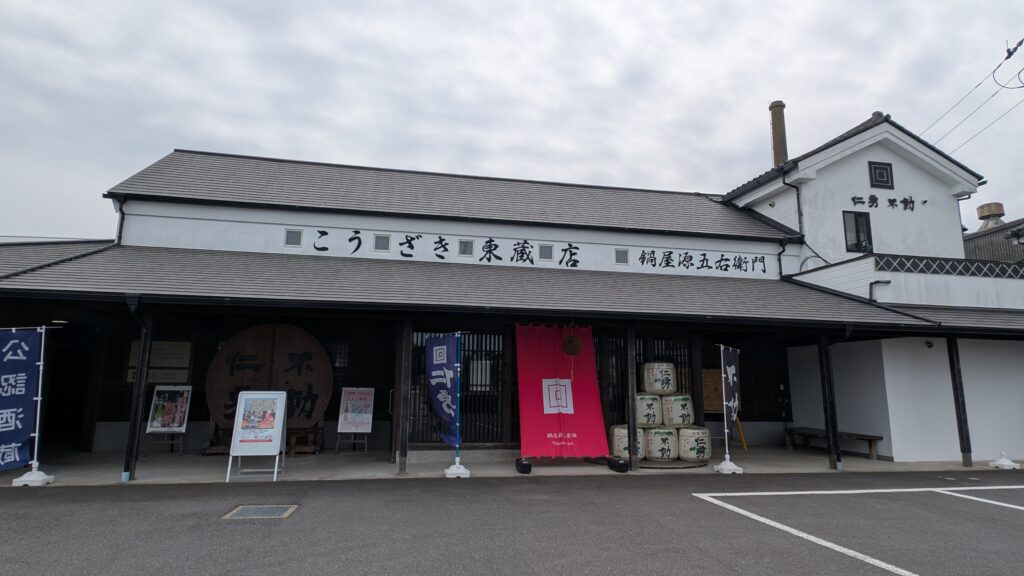
During a recent trip to Japan, I had the opportunity to visit a traditional sake brewery in Chiba Prefecture. Walking through wooden corridors, fermentation rooms, and storage areas offered a fascinating glimpse into a craft that has been refined over centuries.
For many people outside Japan, sake is simply known as “Japanese rice wine.” However, sake is much more than an alcoholic beverage. It is the result of generations of craftsmanship, carefully selected ingredients, and a deep understanding of nature.
Behind every bottle lies a story of rice farmers, master brewers, brewery workers, and local communities that have preserved this tradition for centuries.
In this article, we will explore the history of sake, how it is made, the people behind the brewing process, how it is enjoyed, and the challenges facing the industry today.
What Is Sake?
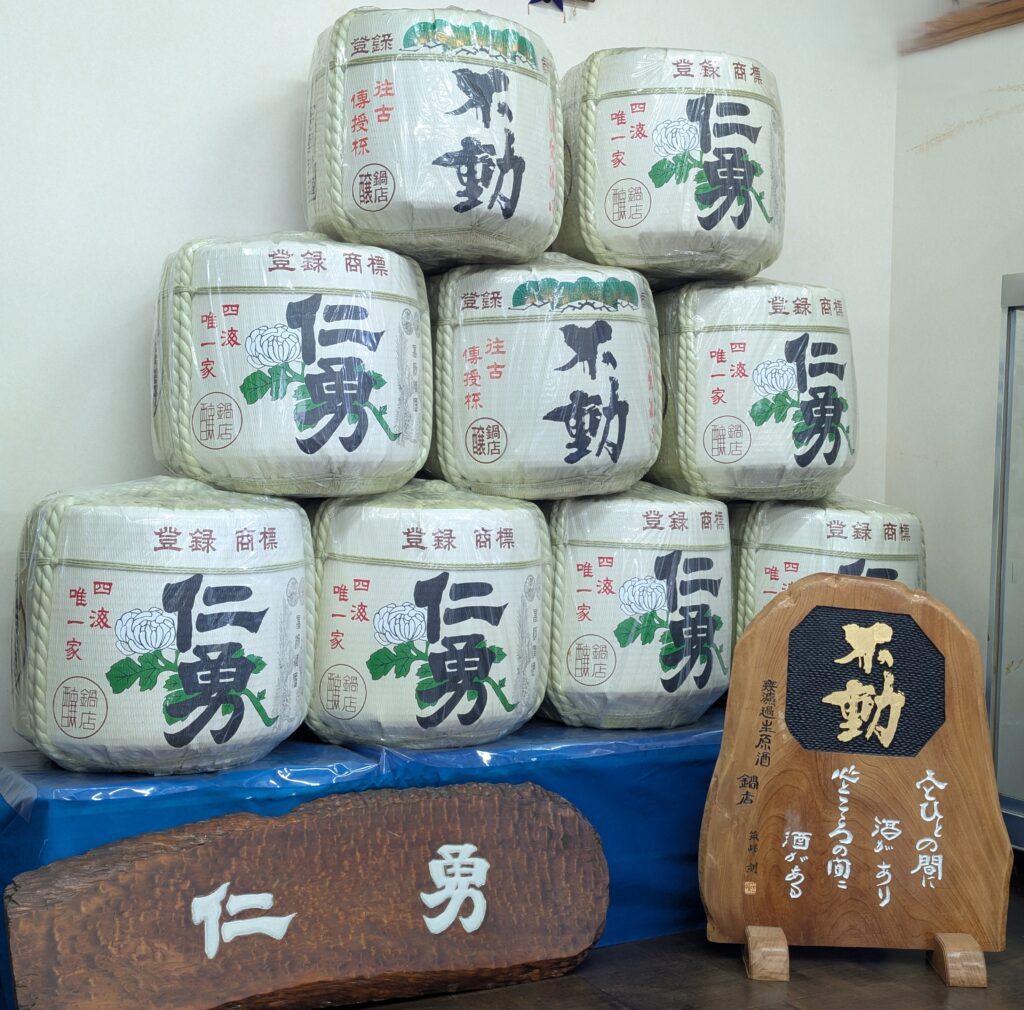
Sake is a traditional Japanese alcoholic beverage made primarily from three ingredients:
- Rice
- Water
- Rice koji
Although sake is often referred to as “rice wine,” its production process is actually quite different from wine making.
Wine is produced by fermenting the sugars naturally present in grapes. Sake, on the other hand, is made from rice, which contains starch rather than sugar. To create alcohol, brewers must first convert starch into sugar using koji mold before fermentation can occur.
This unique process gives sake its distinctive flavor profile and sets it apart from both wine and beer.
The quality of the ingredients is extremely important. In particular, water plays a major role in shaping the final character of the sake. Many famous brewing regions in Japan are known for their high-quality natural water sources.
A Brief History of Sake
The origins of sake can be traced back more than a thousand years.
Early forms of rice-based alcohol were produced in ancient Japan and were often associated with religious ceremonies and offerings to the gods. Sake became closely connected to Shinto traditions and was frequently used during festivals and important rituals.
Over time, brewing techniques improved. During the Heian Period (794–1185), sake became popular among the aristocracy and the imperial court. By the Edo Period (1603–1868), brewing methods had become far more sophisticated, and many of Japan’s famous brewing regions began to establish their reputations.
Today, sake remains an important part of Japanese culture. It is enjoyed during celebrations, weddings, New Year gatherings, and seasonal festivals. At the same time, modern breweries continue to combine traditional techniques with contemporary technology.
How Sake Is Made
Although each brewery has its own traditions and methods, the basic brewing process follows several key stages.
Rice Polishing
The process begins with rice polishing.
Special varieties of rice are often grown specifically for sake production. Before brewing begins, the outer layers of each grain are polished away.
This removes proteins and fats that can affect flavor. In general, the more the rice is polished, the lighter and more refined the final sake becomes.
Washing and Steaming
The polished rice is carefully washed and soaked before being steamed.
Steamed rice provides the foundation for both koji production and fermentation.
Timing is critical. Even small differences in moisture content can influence the final result.
Koji Making
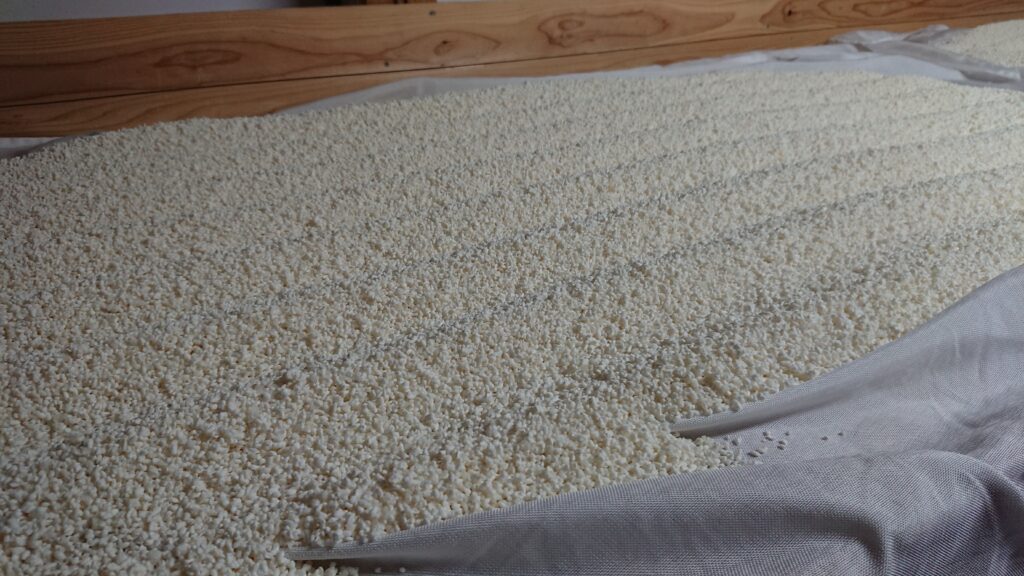
One of the most important steps in sake production is the creation of koji.
Koji mold is cultivated on steamed rice, allowing enzymes to convert starch into sugar.
Without koji, sake brewing would not be possible.
Many brewers consider this stage to be one of the most delicate and technically demanding parts of the entire process.
Fermentation

The rice, water, koji, and yeast are combined in fermentation tanks.
Unlike wine production, where sugar already exists in the fruit, sake undergoes a unique process in which starch conversion and fermentation occur simultaneously.
This process contributes to sake’s complexity and distinctive flavor.
Temperature control during fermentation is extremely important and can significantly influence aroma, texture, and taste.
Pressing and Filtration
Once fermentation is complete, the liquid is separated from the remaining solids.
The solids left behind are known as sake kasu (sake lees).
Rather than being discarded, sake lees are often used in Japanese cuisine, including soups, marinades, pickles, and even desserts. The sake brewery I visited also sells sake lees as a food product, whilst the parts that are unsuitable for human consumption are used as cattle feed.
This reflects a traditional approach of making full use of ingredients and minimizing waste.
Maturation and Bottling
After pressing, the sake may be matured for a period before bottling.
The final product is then prepared for distribution and enjoyment around Japan and increasingly around the world.
The People Behind Sake
Behind every successful brewery are highly skilled individuals dedicated to preserving the craft.
Touji (Master Brewer)
The Toji is the head brewer and oversees the entire production process.
A Toji must possess extensive knowledge of ingredients, fermentation, temperature control, and quality management.
The decisions made by the Toji can have a major impact on the final character of the sake.
Kurabito (Brewery Workers)
Working alongside the Toji are the Kurabito, the brewery workers who carry out daily tasks throughout the brewing season.
Their work requires patience, precision, and close attention to detail.
Together, the Toji and Kurabito preserve techniques that have been passed down through generations.
Why Environment Matters
Sake brewing is deeply connected to the natural environment.
Water Quality
Water is one of the most important ingredients in sake production. Not only does it make up the majority of the finished product, but it also influences fermentation and flavor development.
Many of Japan's most famous brewing regions owe part of their reputation to their local water sources. Soft water often produces a smoother and more delicate sake, while harder water can encourage more vigorous fermentation and create bolder flavors.
Temperature and Humidity
Traditional sake brewing is typically carried out during the colder months of the year.
Low temperatures help brewers maintain precise control over fermentation while reducing the risk of unwanted microbial activity. Even small changes in temperature can affect aroma, texture, and taste, making careful monitoring essential throughout the brewing process.
Rice Production and Climate Change
Rice is the foundation of sake brewing, and breweries depend on a stable supply of high-quality rice.
In recent years, climate change, extreme weather events, and rising production costs have created new challenges for rice farmers and breweries alike. Changes in temperature and rainfall patterns can affect rice quality and yields, while labor shortages and rising costs place additional pressure on the industry.
For many breweries, adapting to these environmental and economic challenges has become an increasingly important part of ensuring their future.
Different Types of Sake
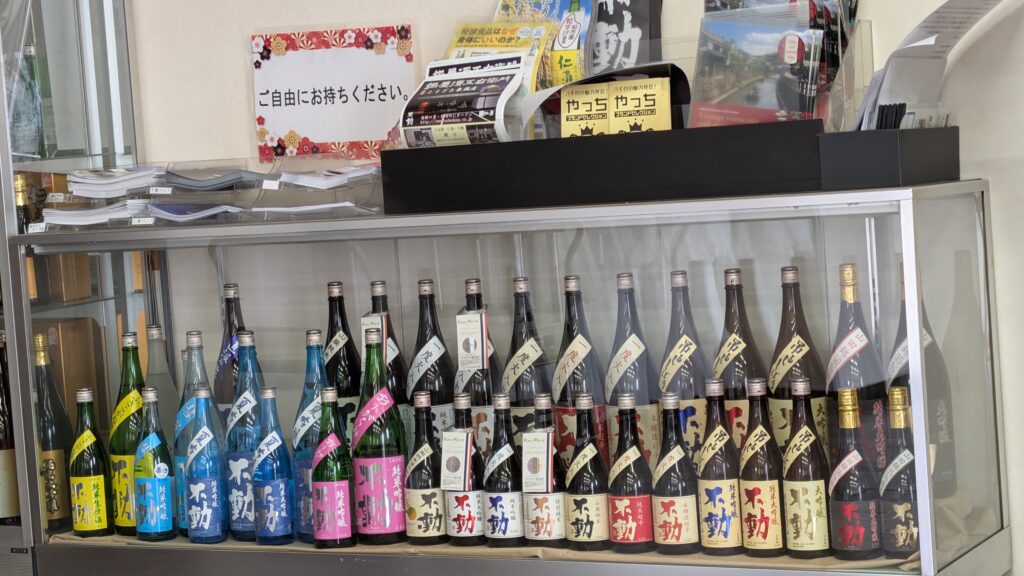
One of the most common misconceptions about sake is that it is a single type of drink. In reality, there are many different styles, each with its own characteristics.
Junmai
Junmai sake is made using only rice, water, and rice koji.
It is often richer, fuller-bodied, and more rice-forward than other styles, making it a good match for robust flavored dishes.
Ginjo
Ginjo sake is typically lighter, more aromatic, and often displays fruity or floral notes.
Its elegant character makes it particularly popular among people who enjoy aromatic white wines.
Daiginjo
Daiginjo is produced using rice that has been polished to a very high degree.
It is often considered one of the most refined styles of sake, offering delicate aromas and exceptional balance.
Nigori
Nigori is a partially filtered sake with a cloudy appearance.
Its creamy texture and slightly sweet character make it quite different from clearer styles of sake and often approachable for first-time drinkers.
How to Enjoy Sake
-1024x680.jpg)
One of the most fascinating aspects of sake is that it can be enjoyed at different temperatures, each offering a unique experience.
Chilled Sake (Reishu)
Chilled sake highlights freshness, crispness, and aromatic characteristics.
Fruit, floral, herbal, and refreshing notes often become more pronounced, while sweetness tends to feel lighter.
Recommended pairings include:
- Sushi
- Sashimi
- Seafood dishes
- Salads
- Cold noodle dishes
- Light Mediterranean cuisine
Room Temperature (Joon)
Room-temperature sake allows drinkers to experience the brewery's intended balance of aroma and flavor.
Because of its versatility, it pairs well with a wide variety of foods.
Recommended pairings include:
- Grilled fish
- Stir-fried dishes
- Tempura
- Pasta dishes
- Mediterranean cuisine
- Chinese cuisine
Warm Sake (Atsukan)
Warming sake enhances its richness and brings forward the sweetness of rice and the savory qualities created during fermentation.
The alcohol feels softer, while umami becomes more noticeable.
Recommended pairings include:
- Hot pots
- Simmered dishes
- Yakitori
- Grilled fish
- Hearty winter dishes
Warm sake is particularly popular during the colder months and provides a very different experience from chilled sake.
Storage and Freshness
How Long Does Sake Last After Opening?
Once opened, sake gradually changes as it comes into contact with air.
Although it does not spoil quickly, oxidation can affect both flavor and aroma. For the best experience, it is generally recommended to consume opened bottles relatively soon.
Nama-zake and Ginjo Sake
These delicate styles are best consumed within 2–3 days after opening.
Refrigeration is strongly recommended.
Honjozo and Futsu-shu
These styles are generally more stable and can often be enjoyed for approximately one week to ten days after opening when stored in the refrigerator.
Can You Drink Old Sake?
Many people assume that old sake automatically becomes unsafe to drink. In reality, sake's relatively high alcohol content means that it is often still safe to consume even after long periods of storage.
However, flavor, aroma, and color can change significantly over time. For this reason, sake is usually best enjoyed within the recommended period to experience the brewery's intended character.
Food Pairing and Comparisons with European Drinks

One reason that sake is becoming increasingly popular outside Japan is its remarkable versatility when paired with food.
Unlike many alcoholic beverages, sake contains significant levels of umami, making it particularly food-friendly.
Seafood
Light and aromatic styles pair beautifully with fish, shellfish, and sushi.
Cheese
Many people are surprised to discover that sake pairs exceptionally well with cheese. Creamy cheeses often work well with Ginjo styles, while richer cheeses can complement Junmai sake.
Mediterranean Cuisine
For readers in Cyprus, Greece, and other Mediterranean countries, sake can pair surprisingly well with seafood, grilled vegetables, olive oil-based dishes, and light meat preparations.
Comparisons with European Drinks
While sake is unique, some styles may feel familiar to European drinkers:
| Sake Style | Similar Impression |
| Ginjo | Aromatic white wine |
| Junmai | Fuller-bodied wine |
| Nigori | Creamy dessert drink |
| Aged Sake | Sherry-like complexity |
These comparisons are not exact, but they can provide a useful starting point for people new to sake.
Challenges and Opportunities for the Sake Industry
While sake remains one of Japan's most iconic beverages, the industry faces significant challenges.
Declining Domestic Consumption
Over the past few decades, domestic sake consumption has declined dramatically.
Figure 1. Domestic Sake Shipments in Japan
Unit: thousand kL
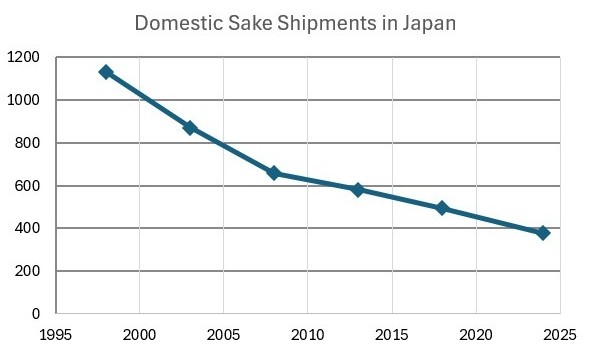
As shown in Figure 1, domestic shipments have fallen significantly since the 1970s. The decline reflects changing lifestyles, an aging population, and increased competition from other alcoholic beverages.
Growing International Demand
The growing popularity of Japanese cuisine around the world has helped introduce sake to new audiences. As more consumers discover Japanese food and culture, interest in premium sake continues to expand.
At the same time, international demand has been moving in the opposite direction.
Figure 2. Sake Export Volume
Unit: kL
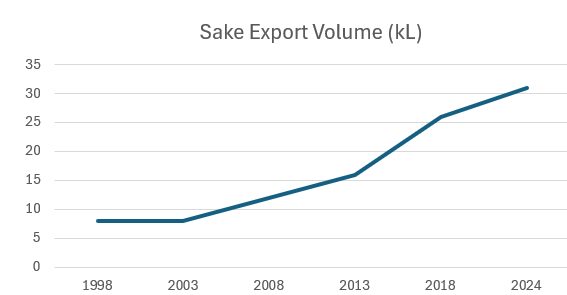
In contrast, sake exports have grown steadily, particularly since the 2010s. Growing global interest in Japanese cuisine and culture has helped introduce sake to new audiences around the world.
Interestingly, this trend was also mentioned during my brewery visit. While domestic demand has decreased, many breweries are increasingly looking toward overseas markets for future growth.
Future Challenges
Despite growing exports, several challenges remain:
- Climate change and changing agricultural conditions
- Rice supply and production costs
- Labor shortages
- An aging workforce
- Succession issues among family-run breweries
How the industry responds to these challenges will play an important role in shaping the future of sake.
Personal Reflection
What impressed me most during the visit was the level of care and attention required to produce high-quality sake with consistent quality year after year.
I learned that everyone involved in the brewing process, including the Toji (master brewer) and the Kurabito (brewery workers), carefully monitors temperature and humidity throughout production. Even small changes in environmental conditions can influence the final product, highlighting the skill and dedication required in sake brewing.
I was also impressed by the brewery's approach to sustainability. Sake kasu (sake lees), a by-product of the brewing process, is not simply discarded. It is sold as a food ingredient for cooking and beverages, while portions unsuitable for human consumption are used as cattle feed. Seeing how materials are utilized with minimal waste felt both practical and surprisingly modern.
The visit reminded me that sake brewing is not only about preserving tradition, but also about adapting traditional knowledge to meet the expectations and challenges of the modern world.
This visit was made possible thanks to the generous hospitality of Nabedana Sake Brewery in Chiba Prefecture. I am grateful for the opportunity to learn more about their brewing process and sake-making traditions.
Nabedana Sake Brewery Official Website
Conclusion
Sake is far more than a drink. It is the result of centuries of knowledge, careful craftsmanship, high-quality ingredients, and a close relationship with nature. From rice polishing and koji making to fermentation and bottling, every stage reflects the dedication of the people who continue this tradition today.
Although the industry faces challenges, growing international interest suggests that sake's story is far from over. As more people around the world discover Japanese cuisine and culture, sake has the opportunity to reach new audiences while preserving the traditions that make it unique.
For anyone interested in Japanese culture, food, craftsmanship, or travel, exploring the world of sake offers a fascinating journey into one of Japan's most enduring traditions.