
Hairstyles are more than a matter of fashion. They often reflect the values, lifestyles and social changes of their time.
In Japan, hairstyles have changed dramatically over the centuries. From the exceptionally long black hair admired at the imperial court during the Heian period to the elaborate hairstyles of the Edo period, and later to Western-inspired cuts and modern salon styles, the history of Japanese hair offers an interesting glimpse into the changing culture of Japan.
The Heian Period — Long Hair as a Symbol of Beauty
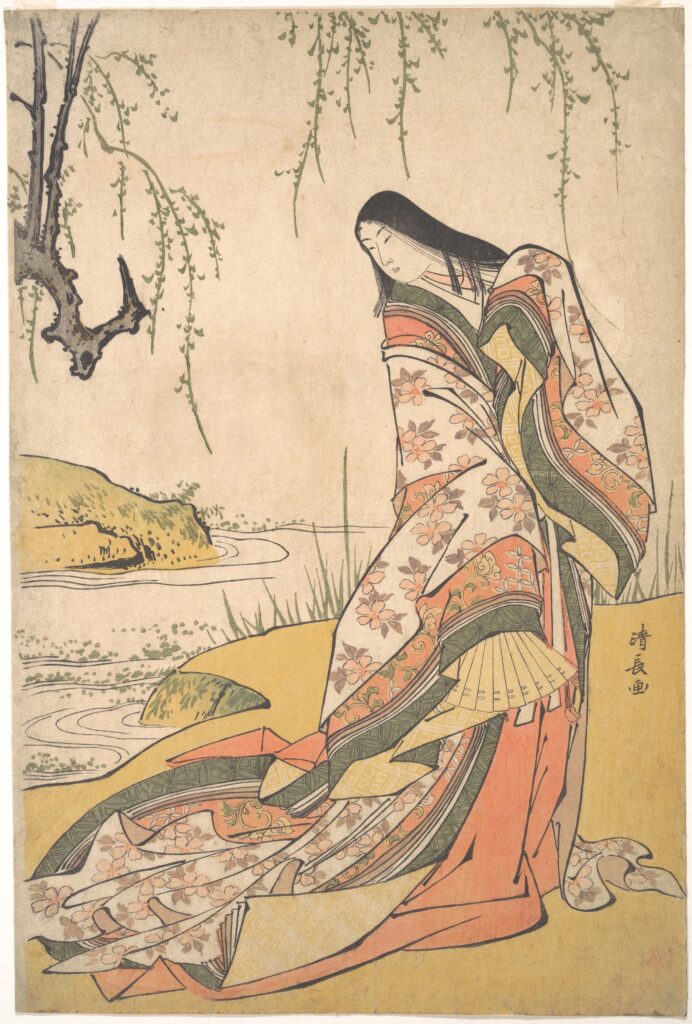
During the Heian period (794–1185 or 1192), Japan developed a distinctive court culture, gradually moving away from the strong influence of China and creating its own forms of art, literature, clothing and beauty.
Among women of the imperial family and aristocracy, long, straight black hair became an important ideal of beauty. Noblewomen allowed their hair to grow extremely long, sometimes reaching beyond the length of their bodies, and wore it flowing down their backs.
The style complemented the elegant, layered robes worn by court women, particularly the jūnihitoe, and reflected the refined aesthetic of aristocratic life. Long, glossy and well-maintained hair itself was considered beautiful; there was little need to create elaborate shapes or cut the hair into a particular style.
This ideal, however, belonged largely to women whose lifestyle allowed them to maintain such long hair.
For people who worked physically, including women engaged in household work, farming or other forms of labour, extremely long loose hair was impractical. Hair needed to be tied or gathered so that it did not interfere with everyday activities.
Even at this early stage, hairstyle could therefore reflect not only beauty, but also a person's way of life and social position.
From Kamakura to Azuchi-Momoyama - Hair Begins to Be Tied and Shaped
Between the elegant court culture of the Heian period and the elaborate hairstyles of the Edo period, Japanese hairstyles went through an important transition.
As political power shifted from the imperial court to the warrior class, lifestyles changed — and hairstyles changed with them.
The Kamakura Period — Hairstyles of the Warrior Class
The Kamakura period (1185 or 1192–1333) marked the beginning of government dominated by the samurai.
Among warrior men, a distinctive hairstyle known as sakayaki began to appear. The hair from the front to the top of the head was removed, while the remaining hair was kept longer.
This style was closely connected with the lifestyle of warriors, particularly the need to wear helmets during battle. At first, sakayaki appears to have been used mainly when necessary rather than as an everyday hairstyle. Over time, however, it would become one of the most recognisable features of the samurai appearance.
The Muromachi Period — Long Hair Begins to Be Gathered
During the Muromachi period (1336 or 1338–1573), hairstyles gradually became more practical and varied.
Men increasingly gathered their remaining hair together, tying it into narrow shapes or folding the tied hair back over the head. These early forms of tied hair helped lay the foundation for the male topknots that would later become common in the Edo period.
For women of the upper classes, long black hair remained an established tradition. However, among ordinary women, hairstyles began to change.
Rather than always wearing their hair loose, women increasingly gathered it to make everyday activities easier. One simple style, known as sagegami, involved tying the hair together low at the back. Another, called tamamusubi, involved tying the hair and forming the end into a loop.
Because these styles were relatively simple to arrange, they spread across different levels of society.
This was a significant step in the history of Japanese hairstyles. Hair was no longer necessarily something that simply fell naturally down the back. It was increasingly being gathered, tied and shaped.
The Later Muromachi Period — The Samurai Hairstyle Becomes Established
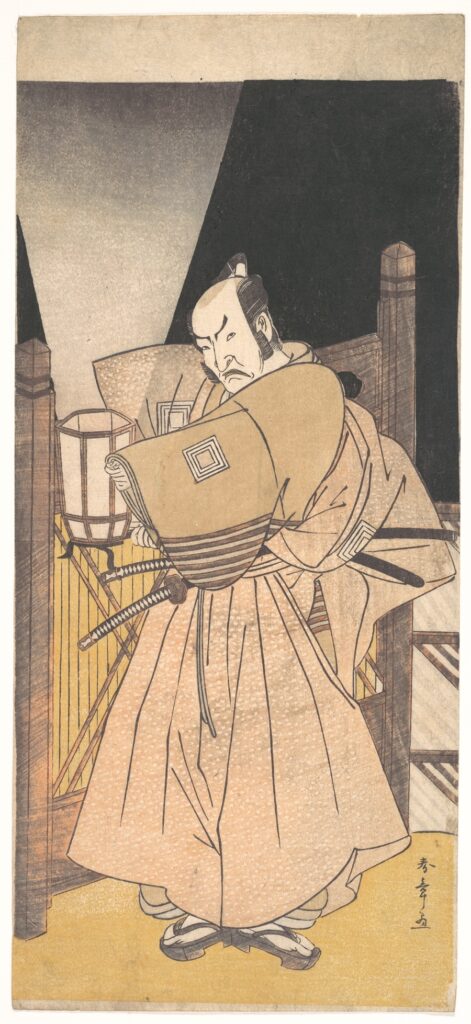
During the later Muromachi period, particularly during the Sengoku, or Warring States, era, warfare became a constant part of life for the warrior class.
The sakayaki hairstyle, which had previously been used more temporarily, became increasingly established among samurai. The distinctive combination of the exposed upper part of the head and longer remaining hair became closely associated with warriors.
As Japan moved toward the end of the sixteenth century, men's tied hairstyles continued to develop, gradually moving toward the forms of topknot later associated with the Edo period.
The Azuchi-Momoyama Period — Women Begin to Wear Their Hair Up
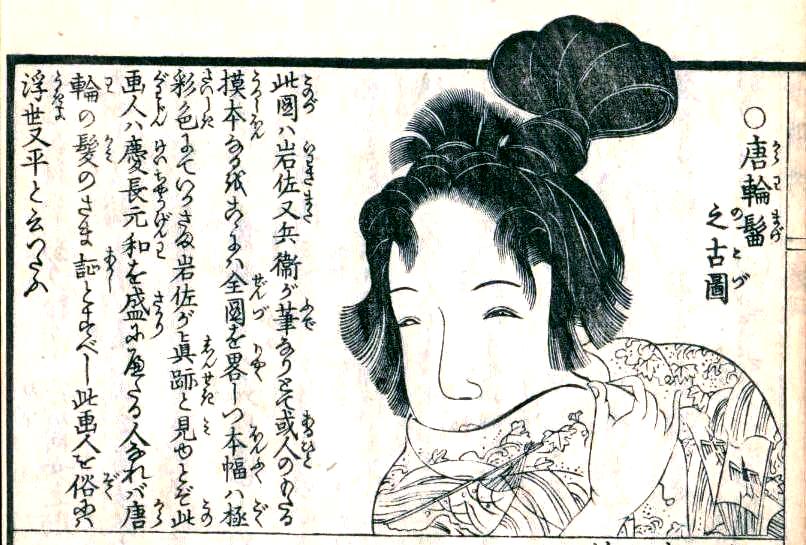
The Azuchi-Momoyama period in the late sixteenth century brought one of the most important changes in the history of Japanese women's hairstyles.
For centuries, particularly amongst the upper classes, wearing long hair that flowed down the back had been regarded as the prevailing ideal; however, by this period, some women began to adopt a hairstyle known as the karawamage.
The style is believed to have been influenced by hairstyles from Ming China and was initially adopted by women in the Yūkaku (遊廓), or legal red-light districts, before spreading more widely.
This change was much more than the appearance of a new hairstyle.
By this period, arranging the hair itself — gathering it, raising it and creating a deliberate shape — had become an increasingly important part of women's hairstyling.
It was this development that would lead directly into the extraordinary variety of elaborate hairstyles seen during the Edo period.
The Edo Period — The Art of Styling Hair
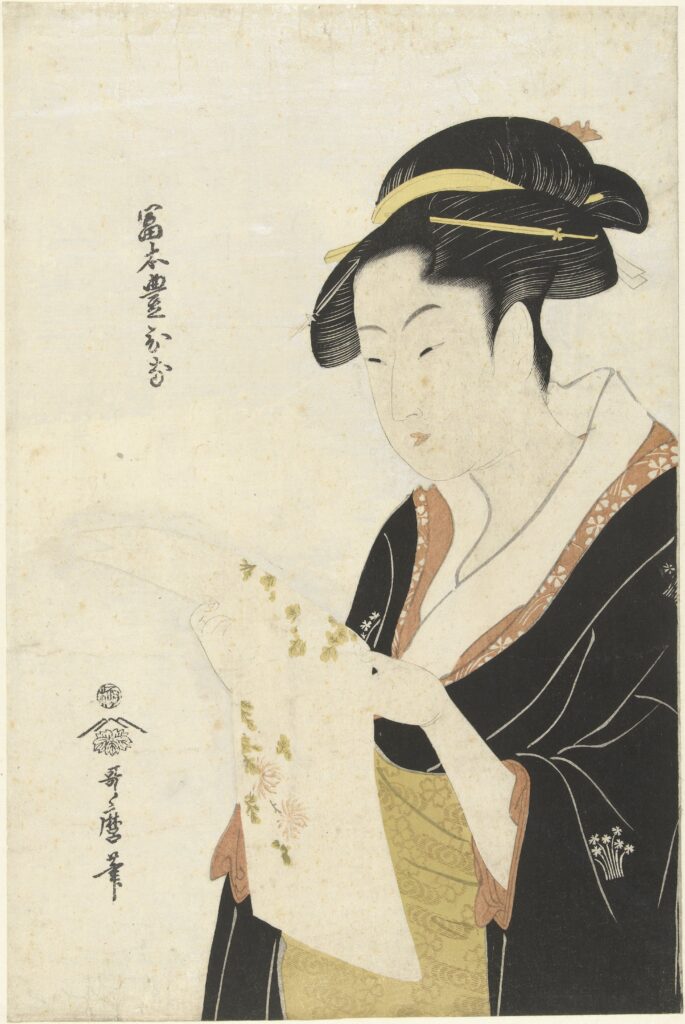
By the Edo period (1603–1868), Japanese hairstyles had changed dramatically.
Japan entered a long period of relative peace and stability, cities grew, and a prosperous merchant and artisan culture developed. Fashion became increasingly important, particularly in urban centres such as Edo, Kyoto and Osaka.
Instead of simply allowing the hair to fall naturally, women began arranging it into increasingly elaborate shapes. Hair was gathered, folded, twisted and tied to create what became known collectively as nihongami, traditional Japanese hairstyles.
Styles such as the Shimada-mage, Hyōgo-mage, Katsuyama-mage and Kōgai-mage developed into numerous variations. Across the Edo period, hundreds of different hairstyle names appeared.
A hairstyle could communicate much more than personal taste. Different styles could be associated with age, marital status, occupation or social position. Hair ornaments such as kanzashi, combs and decorative hairpins also became important parts of fashion.
Popular culture helped spread new styles. Kabuki actors, courtesans and fashionable women depicted in ukiyo-e prints influenced hairstyle trends, much as actors, musicians and fashion figures do today.
Men's hairstyles also reflected social identity. The chonmage, or topknot, became particularly associated with samurai and later became a familiar feature of men's hairstyles during the Edo period.
Hair had therefore become something that could be deliberately shaped to express status, fashion and identity. Compared with the flowing hair of Heian aristocratic women, Edo-period hairstyling had become a highly developed form of personal presentation.
The Meiji Period — Westernisation Changes Japanese Hair

The Meiji Restoration of 1868 brought another major turning point.
Japan began a rapid programme of modernisation, introducing Western technology, institutions, clothing and customs. Hairstyles became one of the most visible symbols of this cultural change.
For men, the change was particularly dramatic.
In 1871, the Meiji government issued an ordinance permitting men to cut off their traditional topknots. Short Western-style hair was increasingly encouraged as part of Japan's modernisation, and after Emperor Meiji himself cut his hair, the new style spread further through society.
Women changed more gradually.
Traditional Japanese hairstyles continued to be widely worn during the early Meiji period, even as Western clothing and customs began appearing among the upper classes. Eventually, however, women also began looking for hairstyles that were easier to maintain and better suited to changing lifestyles.
In 1885, a group promoting new women's hairstyles proposed sokuhatsu — simpler styles influenced partly by Western hairstyling. Unlike elaborate Edo-period nihongami, these styles were easier to arrange and gradually became popular alongside traditional hair. Later styles included large front sections, buns and other arrangements that combined Japanese and Western influences.
The Meiji period therefore represented an important transition. Japan had not simply abandoned its traditional hairstyles overnight. Instead, old and new styles existed together while people's clothing, work and everyday lives slowly changed.
The Taisho Period — Modern Women and New Ideas of Fashion
During the Taisho period (1912–1926), Japan became increasingly urban and exposed to international fashion.
The period is often associated with Taisho Roman — a mixture of Japanese tradition and Western modernity visible in architecture, art, literature and fashion.
Women's hairstyles reflected this mixture.
Western-style waves became fashionable, while styles that softened or covered the ears offered a very different silhouette from traditional Japanese hair. Toward the end of the Taisho period and into the early Showa years, the image of the modern girl, or moga, emerged.
Young urban women began wearing Western clothes, visiting cafés and cinemas and experimenting with new ideas about fashion and independence. Some cut their previously long hair into short bobbed styles — a striking departure from the long black hair that had been admired in Japan for centuries.
For the first time, cutting the hair itself became an increasingly important part of creating a fashionable female hairstyle.
The Showa Period — From Modern Girls to Mass Fashion
The Showa period (1926–1989) brought enormous social change: war, reconstruction, rapid economic growth and the rise of mass consumer culture.
In the early Showa years, short hair and permanent waves became symbols of modern urban fashion. The influence of European and American fashion continued to grow, particularly through magazines and films.
After the Second World War, Western influence became even stronger. As Japan rebuilt its economy and television, cinema and fashion magazines became part of everyday life, hairstyles changed more quickly than ever before.
Permed styles became popular among women, while short cuts, bobs and increasingly sophisticated layered styles offered many more possibilities than the traditional hairstyles of earlier centuries.
By the 1960s and 1970s, hairstyles were also becoming part of youth culture. Fashion was no longer determined mainly by age, marital status or social class. Young people could use their hair to express their generation and personal taste.
The economic boom of the 1980s produced another distinctive period of fashion. Volume became important, and styles such as long one-length hair, large waves and voluminous perms appeared alongside increasingly diverse cuts.
By this point, the relationship between hair and society had changed considerably. A hairstyle was becoming less of a marker of social position and increasingly a form of personal style.
The Heisei Period — Individuality Takes Centre Stage
The Heisei period (1989–2019) saw an explosion in the variety of Japanese hairstyles.
Fashion magazines, television celebrities, musicians and later the internet allowed trends to spread rapidly. At the same time, improvements in hair colouring, perming and salon techniques gave people far greater freedom to change their appearance.
During the 1990s, brown and lighter hair colours became increasingly visible, particularly among younger generations. Layered cuts, long straight hair, shorter styles and the distinctive looks associated with youth cultures such as gyaru all became part of Japan's changing fashion landscape.
In the 2000s and 2010s, trends diversified even further.
Bobs, short cuts, soft waves, layered styles, natural-looking colours and casual arrangements existed side by side. Rather than having one hairstyle representing an entire generation, people increasingly selected styles according to their face shape, fashion, profession and individual identity.
Traditional Japanese hairstyling did not disappear either. Nihongami and modern variations of it continue to be worn for weddings, Coming of Age ceremonies, festivals and other special occasions, allowing traditional beauty and contemporary fashion to coexist.
Hair as a Reflection of Japanese Society
Looking across more than a thousand years of Japanese history, hairstyles reveal much more than changing fashion.
In the Heian period, long flowing black hair represented the refined beauty of aristocratic court culture.
During the medieval period, hairstyles gradually shifted from being worn loose to being gathered, tied and shaped, laying the foundation for the elaborate styles that would flourish in the Edo period.
During the Edo period, complex hairstyles developed alongside the growth of cities, popular culture and a sophisticated fashion world.
The Meiji period brought Westernisation and the gradual decline of the traditional topknot, while the Taisho and early Showa periods introduced waves, shorter hair and the image of the modern woman.
By the late Showa and Heisei periods, hairstyles had become increasingly diverse and individual.
The definition of beautiful hair had changed from simply having long, straight black hair to having almost unlimited possibilities of length, shape, texture and colour.
And as the ways of designing hair changed, so did the skills required to create those styles.
As hairstyles became more diverse, the tools used by professional hairdressers also evolved.