

More Than Just a Seasoning
Soy sauce is one of Japan's most famous culinary exports. Today, it can be found in kitchens and restaurants around the world, adding depth and umami to countless dishes.
For many people, soy sauce is simply a condiment served alongside sushi or sashimi. However, behind this everyday seasoning lies a history that spans more than 3,000 years. It is a story of fermentation, cultural exchange, regional innovation, and craftsmanship passed down through generations.
During my recent visit to a traditional soy sauce brewery in Japan, I had the opportunity to learn more about how soy sauce is made and the people working to preserve traditional brewing methods. What I discovered was far more than a seasoning—it was a living piece of Japanese culture.
In this article, we will explore the origins of soy sauce, how it developed in Japan, the traditional methods used to produce it, and why wooden barrel brewing continues to be valued today.
Ancient Roots: From Jiang to Hishio
The history of soy sauce begins not in Japan, but in ancient China.
More than 3,000 years ago, people developed a fermented food known as Jiang (醤). Created by preserving ingredients such as meat, fish, vegetables, and grains in salt, Jiang served both as a method of food preservation and as a flavorful seasoning.
Over time, different forms of fermented sauces evolved, and knowledge of these fermentation techniques spread throughout East Asia.
When these ideas reached Japan, they gradually developed into a variety of fermented foods collectively known as hishio (醤).
These early fermented seasonings laid the foundation for what would eventually become modern soy sauce.
Hishio in Ancient Japan
Records show that fermented seasonings similar to hishio were already being used in Japan by the seventh and eighth centuries.
During the Nara Period (8th century), the imperial court even established government offices responsible for producing and managing fermented foods. At this stage, however, soy sauce as we know it today did not yet exist.
Instead, Japan had various forms of hishio made from fish, grains, or soybeans. These products were used to enhance flavor and preserve food, gradually becoming an important part of Japanese cuisine.
Over the centuries, Japanese brewers continued experimenting with fermentation techniques, adapting them to local ingredients and tastes.
From Miso to Soy Sauce
One of the most well-known stories surrounding the birth of Japanese soy sauce takes place during the Kamakura Period (late 12th -14th century).
According to tradition, a Zen Buddhist monk named Kakushin traveled to China to study Buddhism. During his stay, he learned how to make a fermented soybean paste known as Kinzanji Miso.
After returning to Japan, Kakushin introduced the technique to what is now Wakayama Prefecture. While producing the miso, brewers noticed that a flavorful liquid collected at the bottom of the fermentation barrels.
Rather than discarding this liquid, they began using it as a seasoning.
Its rich aroma and deep umami proved popular, and over time the production method was refined. Eventually, this liquid evolved into a distinctly Japanese product: soy sauce.
While historians continue to debate the exact origins of soy sauce, this story illustrates how Japanese fermentation culture adapted foreign influences and transformed them into something uniquely Japanese.
The Rise of Soy Sauce Across Japan
During the Muromachi Period (14th -16th century) and especially the Edo Period (17th -19th century), soy sauce spread rapidly throughout Japan.
The growing population of Edo (modern Tokyo) created enormous demand for flavorful and affordable seasonings. Soy sauce became essential for many of the dishes associated with Edo food culture, including sushi, soba noodles, grilled fish, and simmered dishes.
Major production centers emerged in regions such as Noda and Choshi in present-day Chiba Prefecture. These areas benefited from access to high-quality water, agricultural products, and convenient shipping routes to Edo.
As transportation networks improved, regional styles of soy sauce began to develop, each reflecting local tastes and culinary traditions.
By the end of the Edo Period, soy sauce had become one of the most important seasonings in Japanese cuisine.
Traditional Soy Sauce Brewing
Although recipes vary from brewery to brewery, traditional soy sauce production relies on four simple ingredients:
- Soybeans
- Wheat
- Salt
- Water
The magic lies not in the ingredients themselves, but in the fermentation process.
Preparing the Koji
The process begins by steaming soybeans and roasting wheat.
These ingredients are mixed together and inoculated with koji mold. The mold breaks down proteins and starches into amino acids and sugars, creating the foundation for soy sauce's complex flavor.
Creating Moromi
The koji is then combined with saltwater to create a mash known as moromi.
At this stage, the mixture begins a long fermentation process involving yeast, lactic acid bacteria, and many other microorganisms.
Fermentation

Traditional breweries often allow moromi to ferment for one to three years.
During this time, microorganisms slowly transform the ingredients, producing the deep aroma, color, and umami associated with soy sauce.
Pressing and Finishing
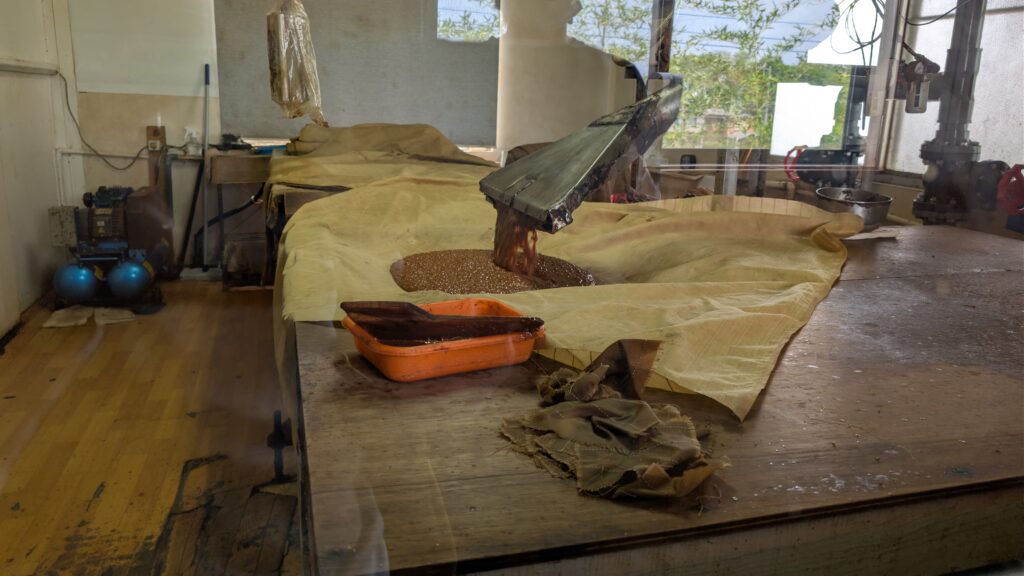
Once fermentation is complete, the moromi is pressed to separate the liquid from the solids.
The resulting liquid is filtered, heated, and bottled as soy sauce.
While the process sounds straightforward, the quality of the final product depends heavily on the environment in which fermentation takes place.
This is where traditional wooden barrels become especially important.
Wooden Barrels: The Heart of Traditional Brewing

For centuries, Japanese soy sauce was brewed in large wooden barrels known as kioke.
These barrels are typically made from Japanese cedar and can reach several meters in height and width. Unlike modern stainless-steel tanks, wooden barrels are a living environment.
Tiny microorganisms inhabit the surface of the wood, creating a unique ecosystem that contributes to the fermentation process. Over decades—and sometimes more than a century—these microorganisms become part of the brewery's identity.
Many traditional breweries still use barrels that were built before World War II. Some have been in continuous use for over one hundred years.
The barrels are more than production equipment. They are part of the brewery's history, carrying generations of accumulated knowledge and flavor within their wooden walls.
The People Behind the Barrels
The wooden barrels themselves are impressive, but equally remarkable are the craftsmen who build and maintain them.
For centuries, breweries across Japan relied on large cedar barrels for producing soy sauce, miso, vinegar, and sake. However, during the twentieth century, stainless-steel tanks gradually replaced wooden barrels because they were easier to manufacture, clean, and manage.
As demand for wooden barrels declined, so did the number of craftsmen capable of building them.
Today, many of the barrels still used by traditional breweries were made decades ago, and for many years only a single barrel-making company in Japan continued producing new brewing barrels. As older craftsmen retired, there was growing concern that the skills required to build these barrels might disappear entirely.
Recognizing this risk, a group of traditional brewers launched the Kioke Craftsman Revival Project in 2012.
The goal of the project is not only to preserve wooden barrels, but also to train a new generation of craftsmen capable of producing them. Brewers, carpenters, and supporters of traditional fermentation gather to learn techniques that were once passed down from master to apprentice.
In many ways, this effort reflects a challenge facing traditional crafts throughout Japan. Whether it is lacquerware, glassmaking, papermaking, or barrel construction, preserving a craft requires more than protecting finished products. The knowledge, skills, and people behind those products must also be preserved.
By supporting wooden-barrel brewing, these craftsmen and brewers are helping to protect an important part of Japan's cultural heritage.
The Four Charms of Kioke-Brewed Soy Sauce
Compared with modern stainless-steel tanks, wooden barrels offer a very different approach to fermentation.
Their value is not simply historical. The barrels themselves actively influence the flavor, aroma, and character of the finished soy sauce.
A Unique Microbial Ecosystem
One of the greatest attractions of kioke-brewed soy sauce is its individuality.
A wooden barrel can remain in use for more than a century. Over time, microorganisms settle into the microscopic spaces within the wood and create a unique ecosystem.
Because every brewery has its own environment, climate, and history, no two barrels are exactly the same. These living communities of microorganisms contribute to flavors that cannot be replicated elsewhere.
In some ways, traditional soy sauce resembles craft beer or artisan cheese. Each producer develops a distinctive character that reflects its location and history.
A Natural Fermentation Environment
Wooden barrels are made from natural materials and work together with the changing seasons.
Traditionally, brewing begins during the colder months. As temperatures rise in spring and summer, fermentation becomes more active. The wood naturally responds to changes in temperature and humidity, helping create a stable environment for microorganisms.
Unlike highly controlled industrial production, traditional brewing embraces nature's rhythms. The changing seasons become part of the fermentation process itself.
The Flavor of Time
Time is one of the most important ingredients in traditional soy sauce.
Many wooden barrels have been used continuously for 100 to 150 years. Some were built during the Meiji Period or the early years of the Showa Period and remain in service today.
The cedar used to construct these barrels also represents decades of growth. High-quality timber requires careful forest management and long-term planning. In this sense, every barrel reflects the efforts of generations of foresters, craftsmen, and brewers.
Traditional soy sauce is therefore not only a product of fermentation—it is also a product of time.
The Taste of Human Hands
No two batches of moromi develop in exactly the same way.
Changes in temperature, humidity, and microbial activity mean that brewers must constantly observe and respond to the fermentation process.
Some brewers take a meticulous approach, carefully monitoring every stage. Others are more experimental and willing to try new techniques. It is often said that the personality of the brewer can be reflected in the flavor of the soy sauce.
What they all share is a commitment to producing the best soy sauce possible.
This human element is one of the reasons many consumers continue to value traditionally brewed products.
Traditional Brewing and Modern Production
Today, most soy sauce is produced using modern industrial methods.
Large stainless-steel tanks provide a highly controlled environment where temperature and production conditions can be carefully managed. These systems allow manufacturers to produce large quantities of soy sauce efficiently while maintaining consistent quality.
This modernization has helped make soy sauce affordable and accessible to people throughout Japan and around the world.
At the same time, traditional brewing continues to offer qualities that are difficult to reproduce in industrial settings.
Traditional brewing emphasizes:
- Long fermentation periods
- Natural microbial activity
- Seasonal variation
- Individual character
Modern production emphasizes:
- Efficiency
- Consistency
- Scalability
- Stable supply
Rather than viewing these approaches as competitors, it may be more accurate to see them as serving different purposes. Modern production ensures that soy sauce remains widely available, while traditional brewing preserves unique flavors and centuries-old techniques.
Together, they represent two sides of Japan's soy sauce culture.
Regional Soy Sauces of Japan
One of the most fascinating aspects of soy sauce is its regional diversity.
Although many people think of soy sauce as a single product, Japan has developed several distinct styles over the centuries.
Koikuchi Soy Sauce
Originating in the Kanto region, koikuchi is the most common type of soy sauce in Japan today.
It is known for its dark color, balanced flavor, and versatility. Approximately 80 percent of soy sauce produced in Japan belongs to this category.
Usukuchi Soy Sauce
Popular in the Kansai region, usukuchi soy sauce is lighter in color but often contains slightly more salt.
Its pale appearance allows ingredients to retain their natural colors, making it particularly suitable for Kyoto-style cuisine.
Tamari Soy Sauce
Associated with central Japan, especially Aichi Prefecture, tamari soy sauce has a rich flavor and strong umami.
It is often used for sashimi, grilled foods, and dishes where a deeper flavor is desired.
Saishikomi Soy Sauce
Sometimes called "double-brewed soy sauce," saishikomi is produced using soy sauce instead of saltwater during part of the brewing process.
The result is a darker color and a particularly rich, complex flavor.
Shiro Soy Sauce
Produced mainly in parts of Aichi Prefecture, shiro soy sauce contains a higher proportion of wheat and has a very light color.
Its delicate flavor makes it suitable for dishes where appearance is especially important.
Sweet Soy Sauces of Kyushu
In many parts of Kyushu, sweeter soy sauces are preferred.
These regional varieties pair well with local seafood and reflect the distinctive culinary traditions that have developed in southern Japan.
Soy Sauce in Modern Japan
Today, soy sauce remains an essential part of daily life in Japan.
It is used in home cooking, traditional restaurants, and modern cuisine alike. Its versatility allows it to complement everything from simple home-cooked meals to elaborate seasonal dishes.
At the same time, many breweries continue exploring new ways to introduce people to soy sauce culture.
Visitors to traditional breweries can often experience not only the brewing process itself but also a variety of foods inspired by soy sauce. These experiences demonstrate just how versatile this seasoning can be.
We will take a closer look at some of these unique foods and surprising creations in a future post.
Soy Sauce Is Far More Than a Condiment
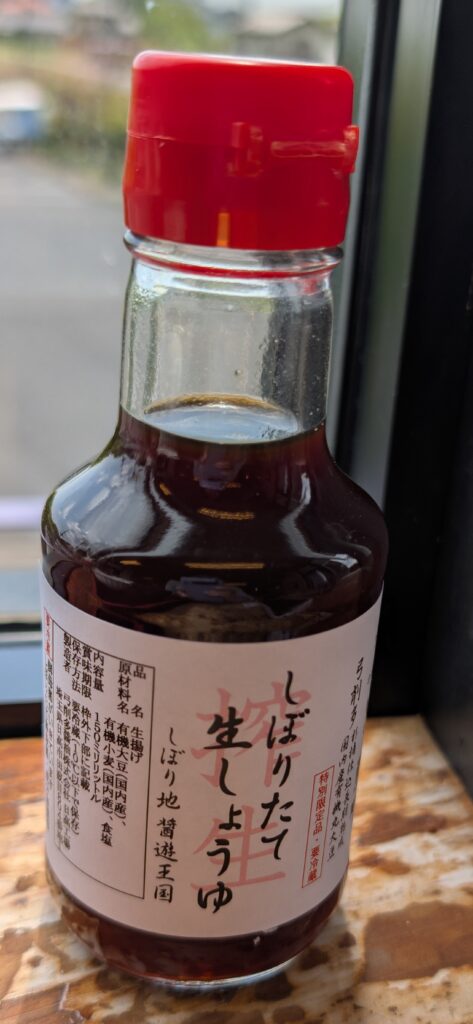
Soy sauce is far more than a condiment.
Its story begins with ancient fermentation techniques, continues through centuries of Japanese innovation, and survives today thanks to the efforts of brewers, craftsmen, and communities dedicated to preserving traditional knowledge.
Behind every drop of traditionally brewed soy sauce lies a combination of nature, time, craftsmanship, and human dedication.
Whether produced in a modern factory or fermented slowly in a century-old wooden barrel, soy sauce remains one of the defining flavors of Japanese cuisine.
And for those who visit a traditional brewery, it quickly becomes clear that soy sauce is not only something to taste—it is also something to experience.