
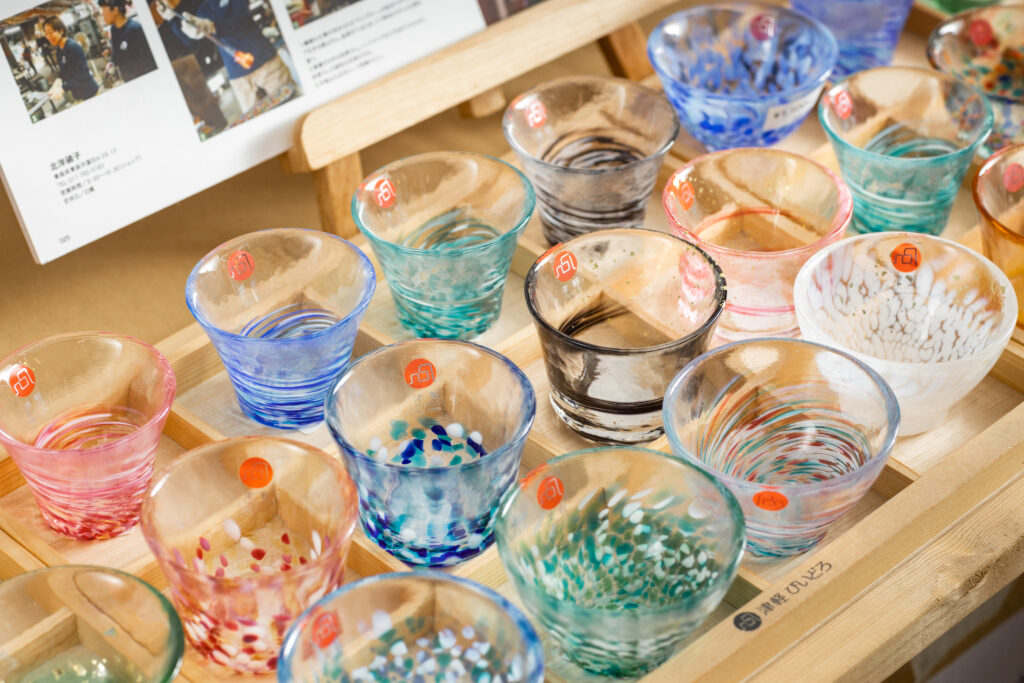
Soft pink cherry blossoms in spring, clear blue skies and festival lights in summer, deep red and golden leaves in autumn, and quiet snow-covered landscapes in winter.
When you look closely at Tsugaru Vidro glassware, you can find many of these colours and scenes reflected within the glass.
Its vivid colours are not chosen simply to make each piece look decorative. The combinations of colour are inspired by the changing seasons, the natural environment and the landscapes of northern Japan.
So where did this richly coloured glassware originate, and what makes it different from other Japanese glass products?
Hokuyo Glass: From Fishing Floats to Handcrafted Glassware
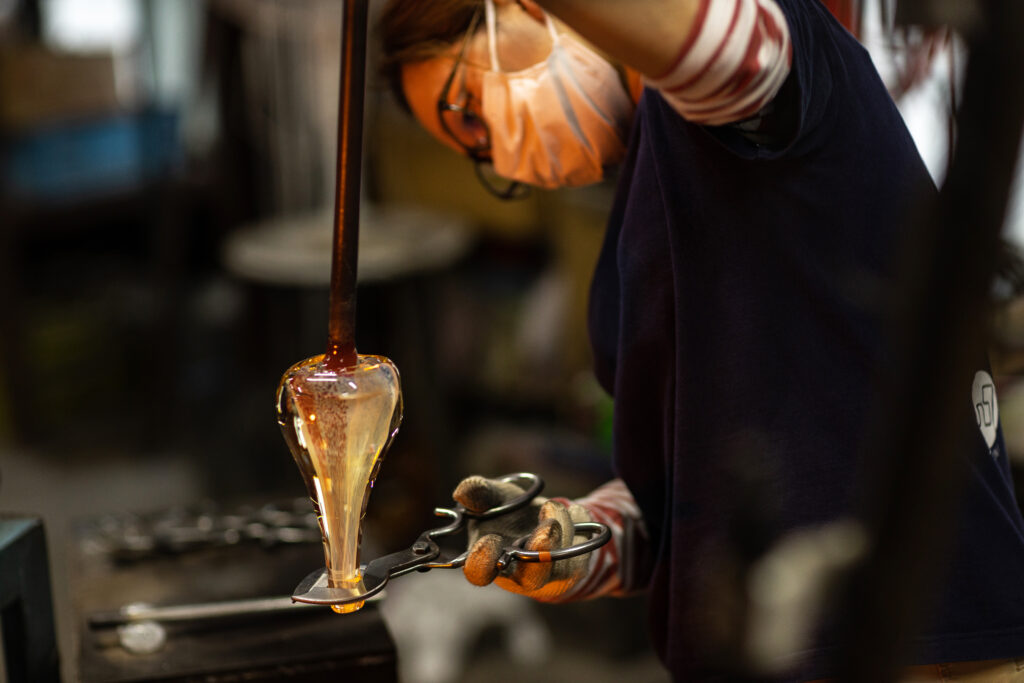
Tsugaru Vidro is produced by Hokuyo Glass, a glassmaking company based in Aomori City, in northern Japan.
The company was founded in 1949 as a manufacturer of glass fishing floats, which were traditionally attached to fishing nets to keep them afloat at sea. Hokuyo Glass became known for producing durable, high-quality floats and, by 1973, had achieved the highest production volume in Japan.
However, as plastic gradually replaced glass in the fishing industry, demand for traditional glass floats declined. Hokuyo Glass responded by applying the glassblowing skills it had developed through float production to a new range of products, including vases, tableware and decorative objects.
By combining these traditional forming techniques with its own specially developed coloured glass, the company created Tsugaru Vidro in 1977. It is now officially recognised as a traditional craft of Aomori Prefecture.
Tsugaru Vidro is therefore not simply a craft that has remained unchanged for centuries. It is a product born from adaptation: local glassmakers preserving their skills by developing them into a new form suited to modern life.
Aomori City: A Northern Port Surrounded by Sea and Mountains
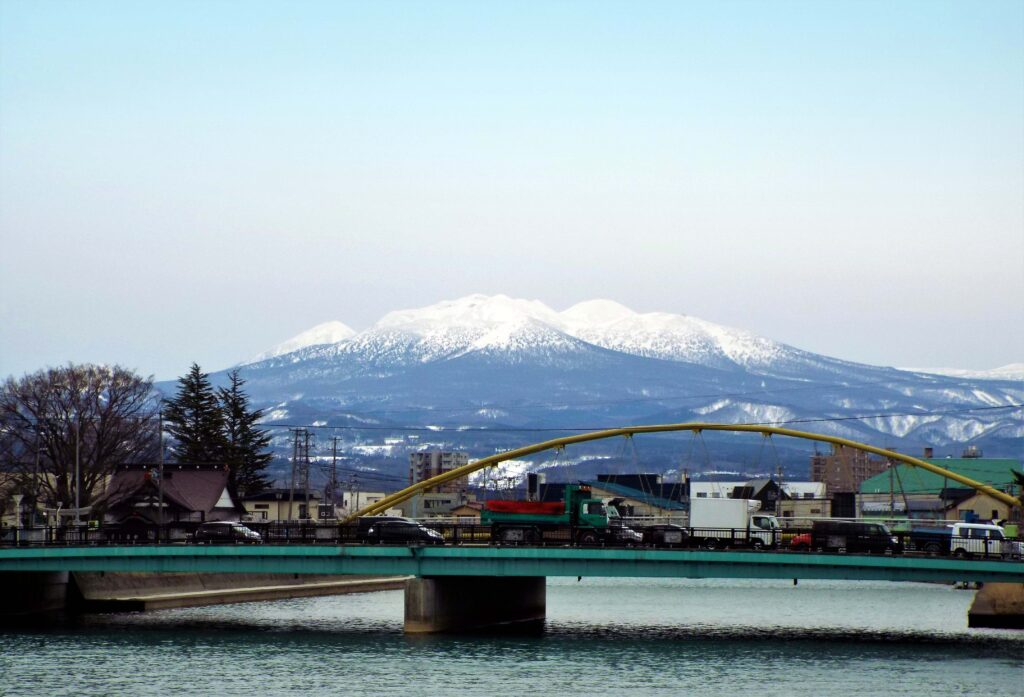
Aomori City is the capital of Aomori Prefecture, located at the northern end of Japan’s main island, Honshu.
Mutsu Bay stretches along the northern side of the city, while the Hakkoda mountain range rises to the south. Although Aomori is an urban centre and an important port, the sea, forests and mountains are never far away.
For readers in Cyprus, Greece and other parts of southern Europe, Aomori may feel like a very different world.
Winters are long and snowy, and the city is often covered by deep snow. In the nearby mountains, trees become completely coated in snow and ice, forming unusual shapes sometimes known as “snow monsters.”
Spring brings the gradual melting of the snow and the return of flowers and fresh greenery. In summer, the city becomes lively during the Aomori Nebuta Festival, when enormous illuminated floats move through the streets at night. In autumn, the surrounding mountains turn vivid shades of red, orange and gold.
The colours of Aomori change dramatically throughout the year: white snow, pale pink blossoms, fresh green leaves, blue sea, glowing festival reds and yellows, and the rich colours of autumn foliage.
This strong contrast between the seasons is essential to understanding the visual character of Tsugaru Vidro.
Handmade Glass Inspired by the Four Seasons
The concept behind Tsugaru Vidro is handmade glass that allows people to experience the four seasons.
Its designs draw inspiration from Japanese landscapes such as spring cherry blossoms, summer festivals, autumn leaves and winter snow. These scenes are expressed through combinations of coloured glass rather than through painted or printed images.
The aim is not simply to show a single shade of red, blue or green. Instead, several colours are layered together to evoke the light, atmosphere and feeling of a particular season.
Blue, for example, can represent a clear summer sky, a quiet sea, a winter evening or the darkness of night. Pink and red may recall cherry blossom petals, sunset light, autumn leaves or the glowing lanterns of a festival.
By combining subtle variations of colour, Tsugaru Vidro seeks to reproduce not only the appearance of nature, but also the memory and atmosphere associated with it.
Many products are therefore given names connected to seasons, weather, flowers and landscapes rather than simply being described as “blue,” “red” or “green.”
This allows people to choose a piece not only because they like its colour, but because it reminds them of a particular place, season or personal memory.
More Than 100 Original Glass Colours
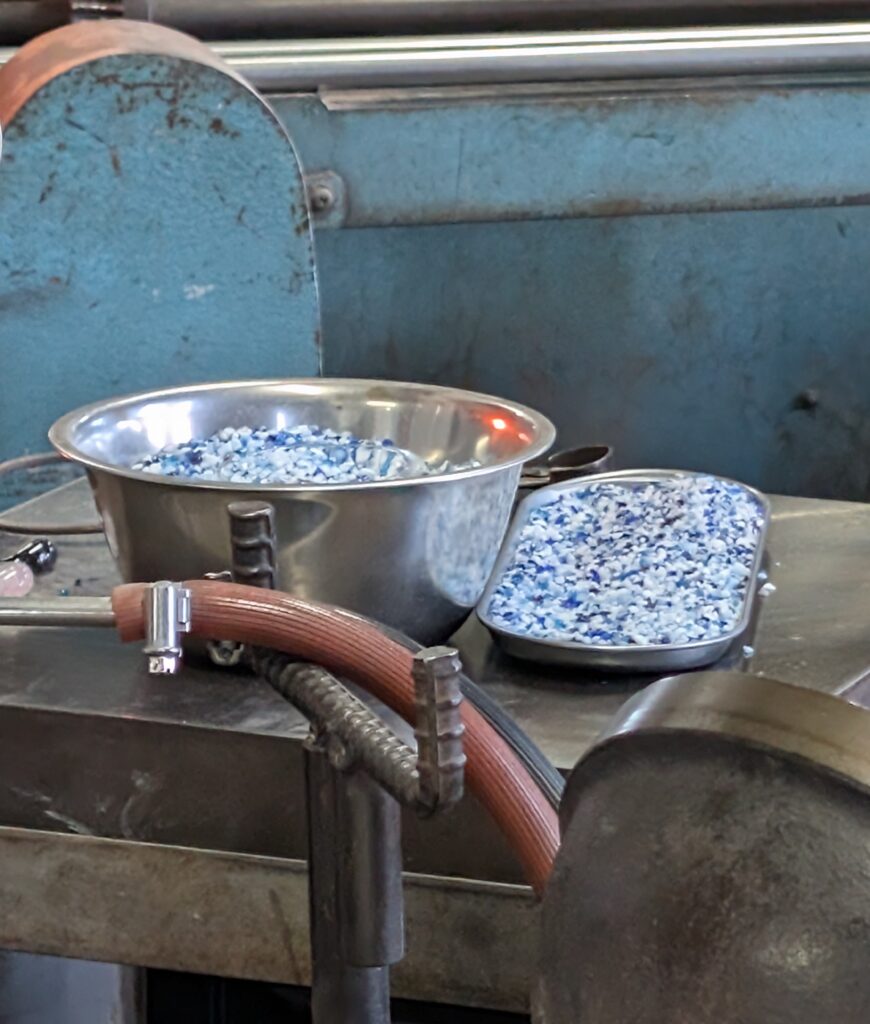
One of the most distinctive features of Tsugaru Vidro is that Hokuyo Glass develops and mixes many of its own coloured glass materials.
The company originally began producing its own colours partly because of Aomori’s geographical and climatic conditions. In the past, transport connections were more limited, and heavy winter snow could make it difficult to obtain the materials needed for production.
As a result, the glassmakers learned to mix and create colours within the workshop itself.
What began as a practical necessity gradually became one of the company’s greatest strengths. Over the years, Hokuyo Glass has developed more than 100 original colour recipes.
Creating coloured glass is more complex than simply choosing a pigment. A small change in the mixture can affect not only the final colour, but also the hardness of the glass, the way it expands when heated and the way it behaves while being blown and shaped.
For this reason, the craftspeople who develop the colours work closely with those who form the finished pieces. They must find a balance between beauty, stability and workability.
The colours of Tsugaru Vidro are therefore not selected from a standard commercial colour chart. They are created through repeated experimentation with raw materials, temperature and glassmaking techniques.
Patterns Created Through Heat and Movement
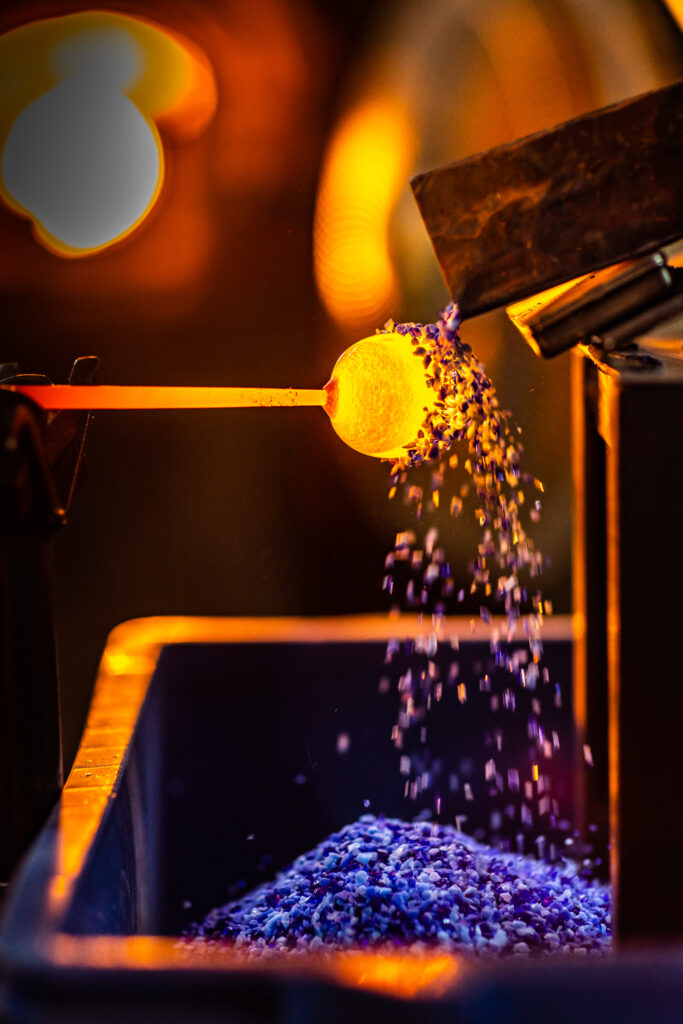
Tsugaru Vidro includes a wide variety of patterns. Some pieces contain small fragments of coloured glass scattered across the surface, while others feature flowing lines, spirals or layers of colour.
In many cases, these patterns are not printed or painted onto the finished object.
Instead, coloured glass is added while the main body of glass is still molten. The glass is then blown, turned, stretched and shaped. As it expands and moves, the coloured particles and lines spread through the surface, creating the final design.
The patterns may appear spontaneous, but they depend on a high level of control.
The position of the colour, the temperature of the glass, the speed of rotation and the pressure applied by the craftsperson can all affect the result. Even a small difference in timing or movement can cause a line to stretch further, a colour to spread differently or a pattern to twist into a new shape.
For this reason, no two handmade pieces are completely identical.
Even products from the same collection may differ slightly in shape, colour placement and pattern. These variations are not manufacturing defects. They are part of the character of handmade glass.
What Makes Tsugaru Vidro Distinctive?
The individuality of Tsugaru Vidro does not come only from the large number of colours it uses.
Its identity is created by several elements working together: the glassblowing skills originally developed through the production of fishing floats, the in-house creation of coloured glass, the slight variations produced by handcrafting, and the idea of translating Japanese seasons and landscapes into colour.
These elements give each piece a strong connection to the place where it was made.
Tsugaru Vidro is colourful, but its colours are not random. They reflect the natural environment and seasonal contrasts of Aomori.
Its patterns may appear free and unpredictable, but they are shaped through the experience and control of skilled craftspeople.
And although the finished products are designed for modern homes and everyday use, the techniques behind them are rooted in the industrial and cultural history of the region.
Choosing a Small Landscape in Glass
Choosing a piece of Tsugaru Vidro is not simply a matter of choosing a glass, bowl or vase in a favourite colour.
One person may be drawn to colours that resemble spring flowers. Another may prefer the deep blue of the sea, the brightness of a summer festival or the calm white and pale blue tones of winter.
The colours may remind people of a season they love, a landscape they have visited or a memory they wish to keep close.
In this way, a small piece of glass can hold something much larger: a season, a landscape and a sense of place.
That is the special appeal of the colours and patterns of Tsugaru Vidro.
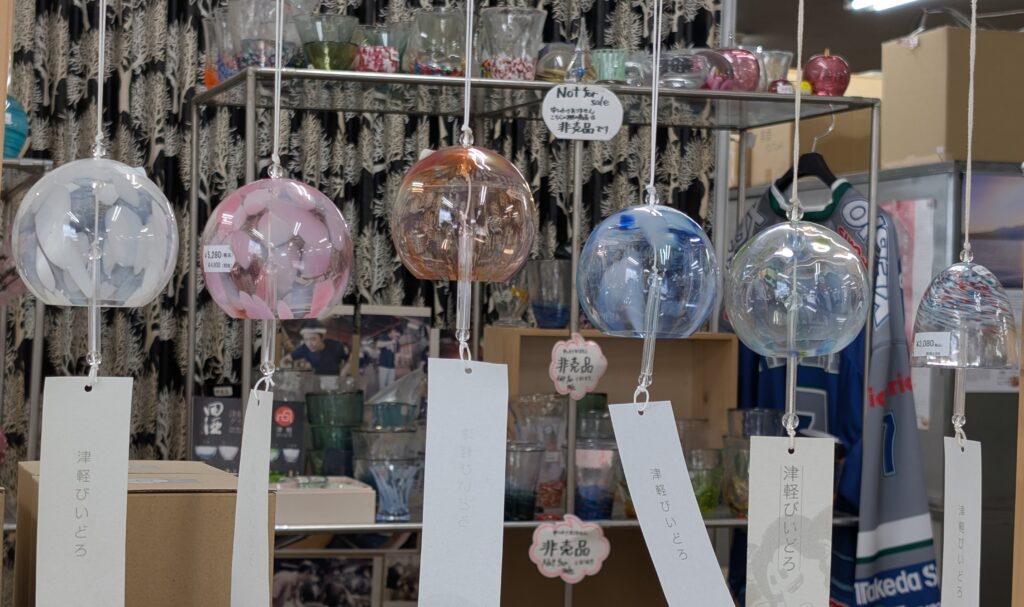
Interested in Tsugaru Vidro?
JLPS helps customers find selected Japanese glassware and coordinates communication and sourcing with suppliers in Japan. Learn more about our Japanese Product Sourcing & Coordination service.