
If you usually prepare vegetables with a small kitchen knife, a collection of long, wide and differently shaped Japanese blades may seem unnecessary. How many knives does one kitchen really need?
The more interesting question is what each knife helps a cook do.
Think of the fish served on a piece of nigiri sushi. Before it reaches your plate, someone has prepared the fish, removed bones and skin, and cut a slice with a particular thickness and shape. Those are different jobs -even though the ingredients are the same.
Understanding the tools behind them reveals something about both Japanese craftsmanship and the food we enjoy.
A Short Guide to the Main Knife Types
You do not need to remember every Japanese name. Start with the job each knife performs.
| Knife | What it looks like | Main role |
| Small utility or paring knife | Short, narrow blade | Peeling, trimming and small tasks |
| Western chef’s knife | Broad, pointed blade, usually with a curved cutting edge | General kitchen preparation |
| Gyuto | Japanese chef’s knife with a pointed blade | A versatile knife for meat, fish and vegetables |
| Santoku | Broad blade with a spine that curves down towards the tip | Everyday preparation of meat, fish and vegetables |
| Deba | Thick, substantial blade | Preparing and filleting whole fish |
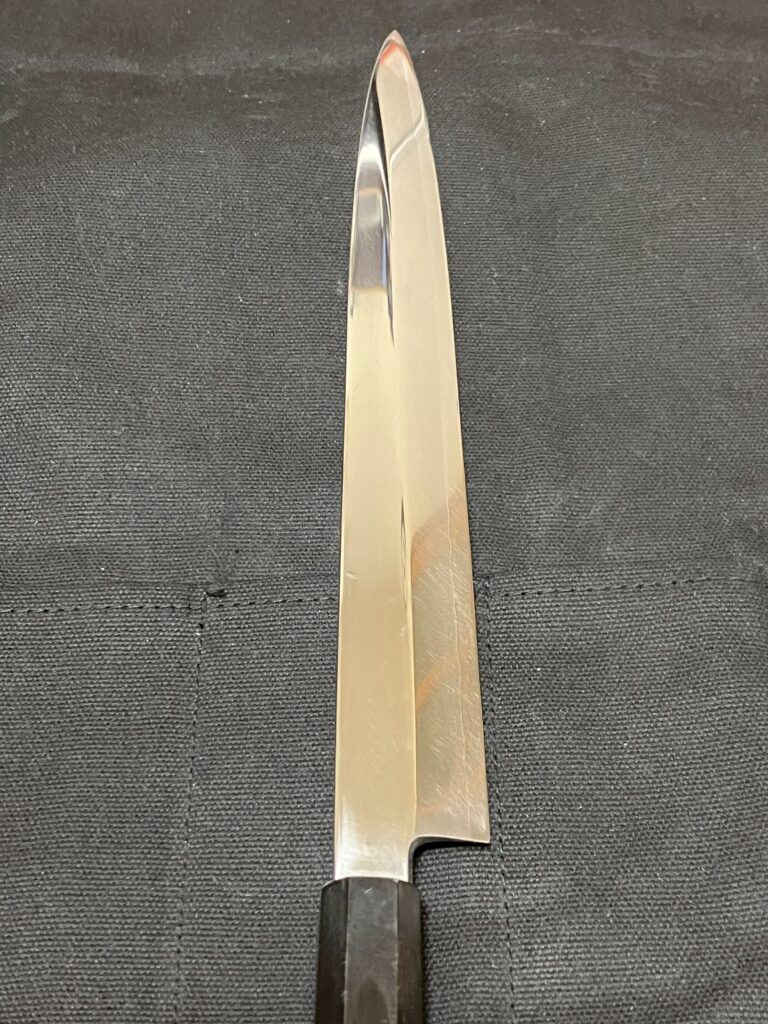
| Yanagiba | Long, narrow, pointed blade | Slicing boneless fish for sashimi and sushi |
| Usuba | Broad vegetable knife with a relatively straight edge | Precise vegetable work, including fine peeling |
These roles overlap. A specialist knife makes a particular task easier; it does not mean every household needs the whole collection. [1, 2]
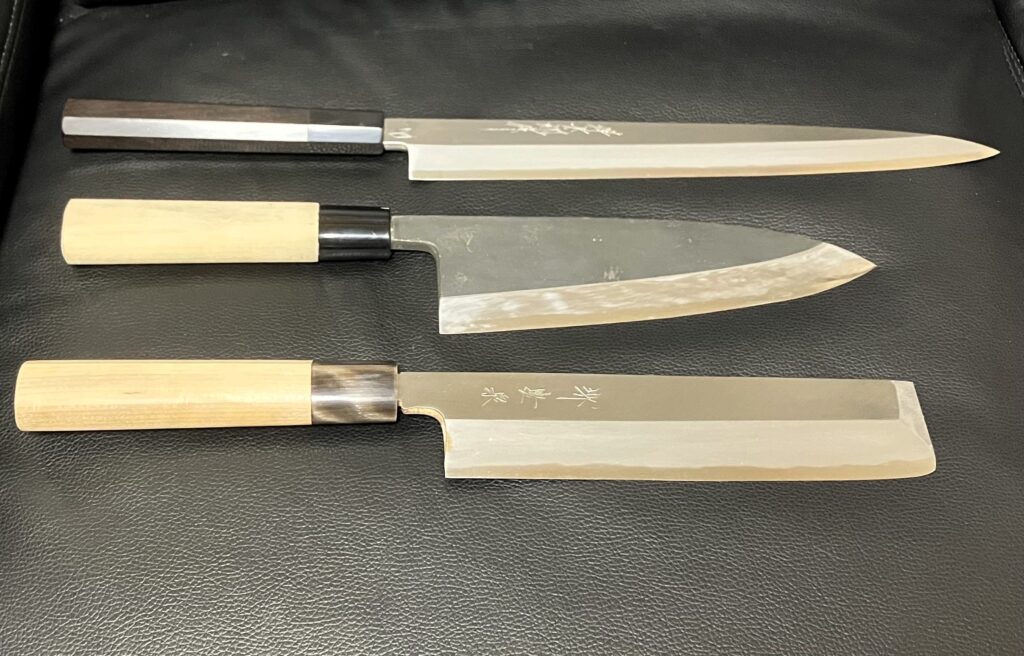
“Japanese” and “Western” are also not completely separate categories. Japan makes Western-style knives, and Japanese designs are used in kitchens worldwide. Traditional Japanese specialist knives and modern Japanese all-purpose knives should not be treated as one identical group.
The Ingredient Matters—but So Does the Job
One Fish, Two Very Different Tasks
Preparing a whole fish means working around its skeleton, separating the flesh and dealing with the head and joints. A deba has a substantial blade suited to this work. Its thickness supports controlled cuts during fish preparation. It is not simply a heavy knife for smashing through anything hard. [1]
Once a boneless portion is ready, the task changes. The cook is now trying to create an attractive slice while handling the flesh gently.
That is where a yanagiba comes in. Its long cutting edge allows the chef to draw the blade through the fish in one continuous stroke, rather than repeatedly sawing back and forth. The useful length is about the distance available for the cut, not merely the size of the fish. [3]
This explains why two knives for the same ingredient can look so different: one prepares the fish; the other prepares the final bite.
Why the Cut Matters in Sashimi and Sushi
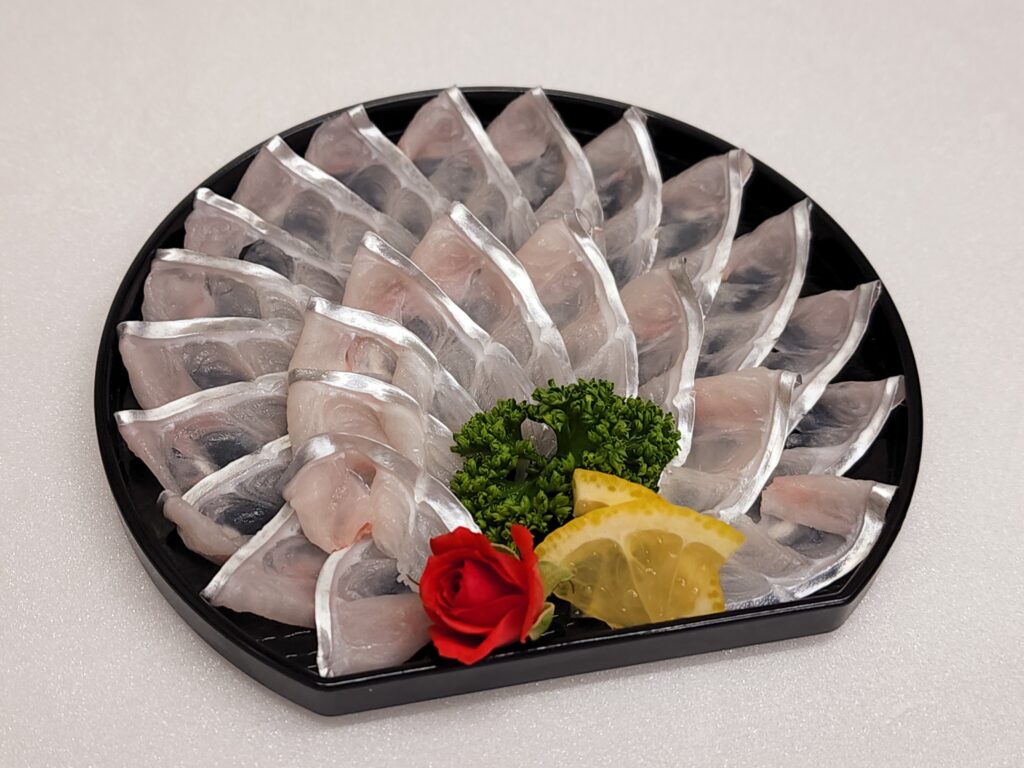
Imagine two slices from the same piece of fish. One has an even surface and clean edges. The other has been compressed and dragged by an edge that struggles to cut.
The difference is visible, but it can also affect the eating experience. A suitable, sharp blade and a controlled drawing cut help limit unnecessary damage to the flesh and produce a smoother surface. Knife maker Fujiwara Teruyasu explains the yanagiba’s length and pulling action in terms of obtaining a clean section without crushing the fish’s fibres. Kikkoman’s discussion of Japanese food texture also connects the smooth surface of carefully sliced sashimi with its feel on the tongue. [3, 8]
Thickness matters too. A thin slice and a thicker piece place different amounts of fish in the mouth, changing the balance of firmness, richness and chew. Thin is not automatically better: the desired result depends on the fish and the dish.
The direction of the cut also deserves attention. Cutting across muscle fibres shortens the fibres in each piece; following them leaves longer strands. The chef considers this alongside the natural firmness of the fish and the angle and thickness of the slice.
For nigiri, the slice must work with the rice beneath it. Its size, flexibility and thickness influence how the two feel together in one bite. For sashimi, the exposed surface and texture are especially noticeable because the fish is presented with relatively little to hide them.
Does a Knife Change the Taste?
It is more accurate to say that cutting can change how we experience an ingredient than to claim that a particular knife automatically makes it tastier.
Texture, moisture, thickness and presentation all contribute to that experience. A cleanly cut slice and a ragged one may feel different even when they come from the same fish. Freshness, handling, temperature and the chef’s skill still matter enormously.
KAI has reported an investigation with OISSY using a taste sensor to compare ingredients cut with new and dulled knives. It suggests that edge condition can affect measured taste characteristics under the tested conditions. It should not be read as proof that Japanese knives always produce better flavour, or that one knife design improves every food. [4]
The clearest lesson is practical: the condition of the edge and the way it is used deserve attention alongside the quality of the ingredient.
Meat: Trimming and Slicing Are Different Jobs
Removing connective tissue or working close to a bone calls for control in a confined space. Cutting neat slices from a boneless roast calls for enough blade length to travel smoothly through the meat.
A knife suited to trimming or boning and a long slicer therefore serve different purposes. Japanese kitchens also use the sujihiki, a long, narrow slicing knife, while the gyuto handles a wider range of preparation. [1, 2]
With meat, cutting across the grain shortens the muscle fibres in the bite. This can make the meat easier to chew. It is the relationship between the food and the direction of the cut that matters; an expensive knife cannot compensate for every preparation decision. [9]
Vegetables: Familiar Ingredients, Noticeable Results
Consider a tomato that flattens before its skin gives way, or herbs that become bruised during repeated chopping. A struggling edge can press and crush while it cuts. KAI discusses this tissue damage and moisture release in its explanation of sharpness. [4]
Evenly sized pieces also cook more consistently. In a raw salad, their shape changes the bite: a thick cucumber chunk and a fine cucumber slice feel different even before dressing is added.
An usuba is a traditional specialist for detailed vegetable preparation. For everyday chopping, an all-purpose knife may be entirely sufficient. The point is to match the tool to the work, rather than to collect a separate knife for every vegetable.
How Blade Shape Relates to Movement
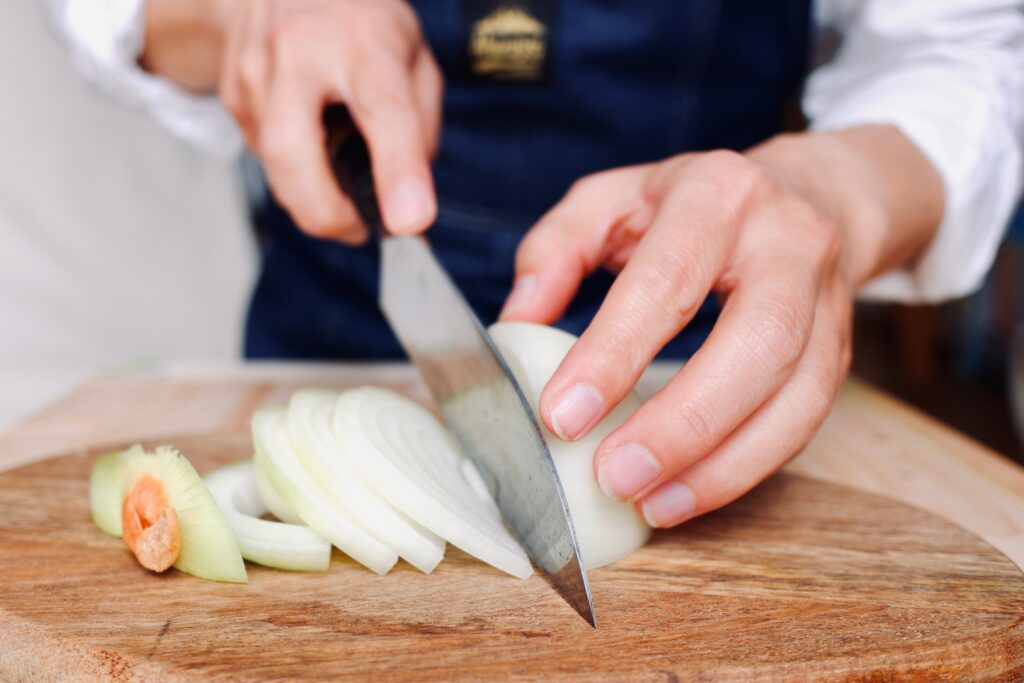
A longer edge gives more room for a drawing slice. A relatively straight edge suits chopping and push-cutting, while a curved edge supports a rocking movement.
Many European-style chef’s knives suit rocking cuts, but this is a tendency rather than a universal rule. WÜSTHOF itself distinguishes the movements suited to different blade designs. [5]
Nor is there one exclusively “Japanese” movement. A cook may push-cut vegetables, draw-cut fish and use other movements according to the knife and task.
A small knife remains useful for peeling and fine work. Board-based slicing introduces different requirements: room for the stroke, support for the ingredient and clearance for the hand. Understanding that difference makes a larger kitchen knife less mysterious.
Single-Bevel and Double-Bevel: What Is the Difference?
The bevel is the sloping surface leading towards the cutting edge.
On a double-bevel knife, both sides slope towards the edge. A traditional single-bevel knife has a pronounced bevel mainly on one face, with a different geometry on the reverse.
Traditional yanagiba, deba and usuba are commonly single-bevel designs. Santoku and gyuto are generally double-bevel. “Made in Japan” therefore does not mean “single-bevel.” [6, 7]
Single-bevel knives support particular specialist techniques, but require familiarity with their cutting behaviour and sharpening. Many are made for a specific handedness. Double-bevel knives are often more familiar for general kitchen use, although individual designs vary.
Neither structure is automatically superior for every task.
Steel and Construction: Beyond the Appearance
Carbon steel and stainless steel are both used in kitchen knives. Carbon steel generally needs more attention to prevent rust. Stainless steel resists corrosion more readily, but still needs proper care.
Construction varies too. Some blades use one steel throughout; others combine a cutting core with outer layers of a different material. A carbon-steel core can be surrounded by stainless steel, for example, while its exposed edge still needs care. [6]
Performance depends on the steel, heat treatment, geometry and sharpening together. Hardness alone is not a complete measure of quality. KAI describes the balance between wear resistance, toughness and corrosion resistance as part of knife performance. [4]
This continues the idea explored in our earlier article, "From Swordsmiths to Modern Japanese Blades: A Legacy of Working with Steel": material and craftsmanship matter because they help a blade perform its intended work.
What Matters in Your Own Kitchen?
Start with what you actually prepare. Do you mostly peel and trim small ingredients? Slice vegetables on a board? Prepare whole fish, or buy boneless portions? Is sashimi something you make regularly, or something you enjoy watching a chef prepare?
Then consider the size and weight you find comfortable, your familiar cutting movements and the maintenance you are willing to do.
One well-maintained all-purpose knife may meet most everyday needs. A specialist earns its place when its particular design solves a task you perform often.
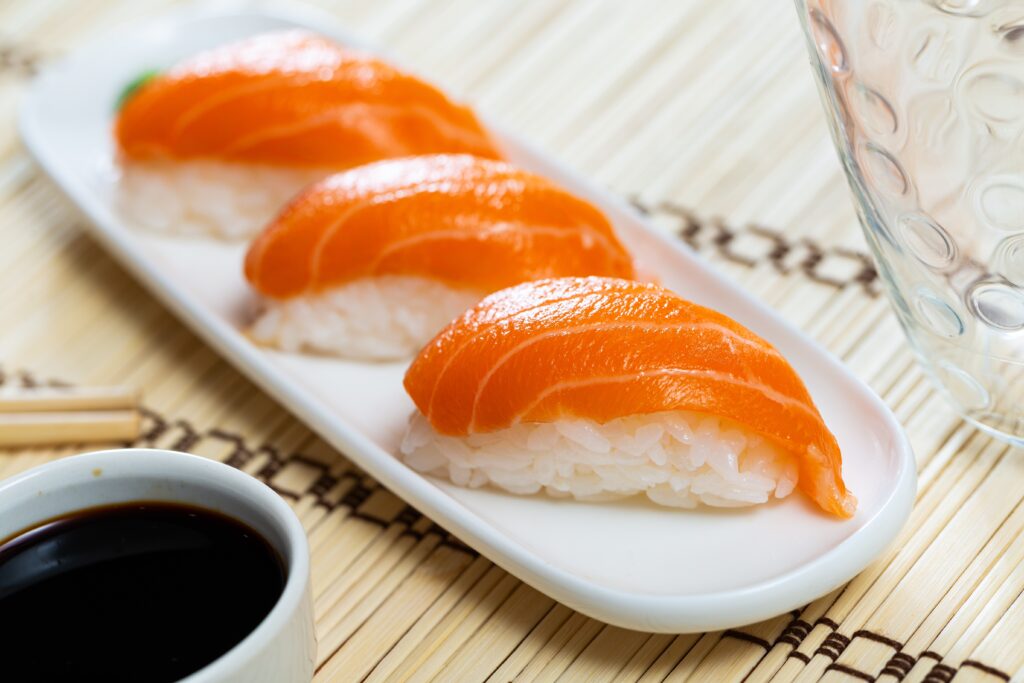
The next time you watch a chef draw a long blade through fish for sushi, look at the movement and the slice it creates. The blade’s shape becomes easier to understand when you can see the job behind it.
Interested in purchasing a traditional Japanese kitchen knife? Tell us what you’re looking for through our Request Form. JLPS can help you explore suitable options and coordinate sourcing from Japan.
Refeernces
1. [TOJIRO — About Kitchen Knives](https://www.tojiro-japan.com/kitchen-knife/)
2. [KAI — Western-Style Knife Types](https://www.kai-group.com/products/special/hocho/select/you/)
3. [Fujiwara Teruyasu — Yanagiba Characteristics](https://yanagiba.teruyasu.jp/characteristics/)
4. [KAI — Sharpness and Food Quality](https://www.kai-group.com/products/special/hocho/sharpness/)
5. [WÜSTHOF — Meet the Super Slicer](https://wusthof.com/blogs/the-chefs-table/right-knife-for-the-job-super-slicer)
6. [KAI — Knife Materials and Construction](https://www.kai-group.com/products/special/hocho/learn/material/)
7. [KAI — Kitchen Knife FAQs](https://www.kai-group.com/support/faq/cooking/knife/)
8. [Kikkoman Food Forum — Autumn 2022](https://www.kikkoman.com/en/culture/foodforum/digitalbook/pdf/foodforum36-3.pdf)
9. [Kansas Beef Council — Basics About Beef](https://www.kansasbeef.org/Media/KSBeef/Docs/basics-about-beef-web_blacktanredcover.pdf)