
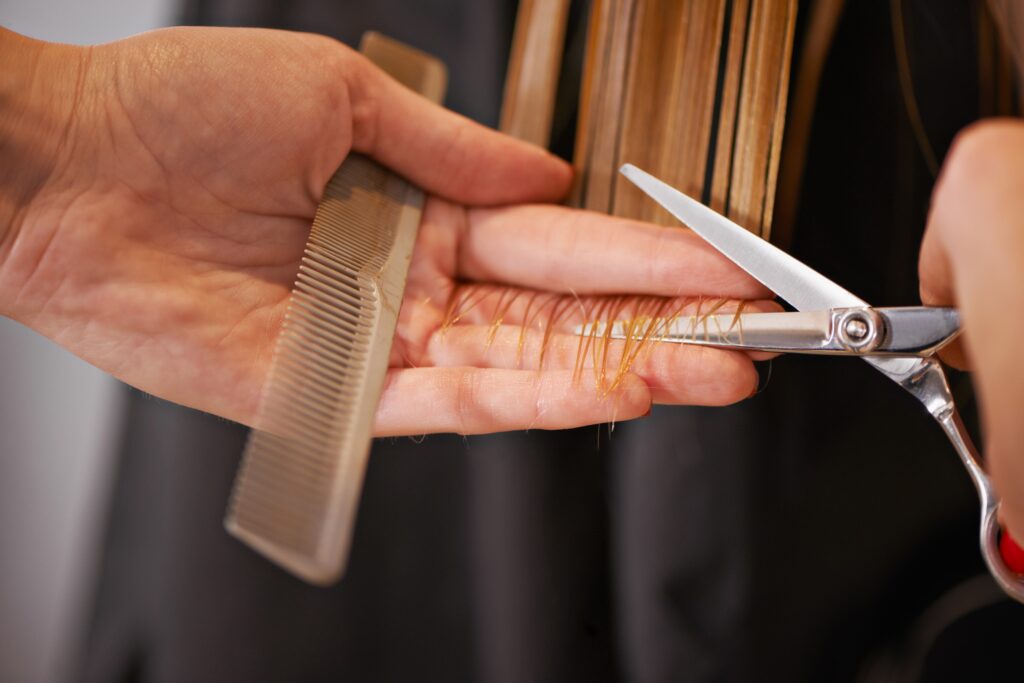
When we watch a skilled hairdresser at work, the scissors can appear to move almost effortlessly. A section of hair is lifted, the blades open and close, and a new line or shape begins to emerge.
This apparent simplicity can make it easy to assume that professional hairdressing scissors are just sharper versions of ordinary scissors. However, professional scissors are precision tools designed to give hairdressers greater control over how, where and at what angle the hair is cut.
A successful haircut does not come from the scissors alone. It begins with the hairdresser’s knowledge, judgement and technique. The right scissors support those skills, allowing the hairdresser to translate an idea into shape, texture and movement with greater accuracy.
A Haircut Is More Than Removing Length
Cutting hair is not simply a matter of making it shorter. A hairdresser must consider the client’s hair type, density, growth pattern, face shape and daily styling habits.
Even hairstyles of a similar length can look completely different depending on how the weight is distributed and how the outline and internal structure are created. As explored in our article on men’s hairstyles, professional cutting techniques can produce anything from a clean, structured silhouette to a softer style with visible texture and movement.
The same principle applies to women’s haircuts. Layers, blunt lines and face-framing sections all require different levels of precision and control. Our article on women’s haircuts and scissor techniques explains how techniques such as point cutting, layering and texturising can change the weight, shape and movement of the finished style.
The result, therefore, is not created by “hair plus scissors” alone. It comes from the relationship between design, technique and professional tools.
What Makes Professional Hairdressing Scissors Different?
Professional hairdressing scissors are designed specifically for repeated, controlled cutting of hair. Their performance depends on several elements working together—not only on how sharp the blades are.
Blade Design
The shape and edge of a blade influence how it meets and moves through the hair.
Some scissors are designed to give the hairdresser stability and control when creating a clean line. Others allow a smoother, more fluid cutting action that may be suited to softer techniques or cutting movements through the hair.
Different blade designs can therefore create a different cutting experience, even when the scissors appear similar at first glance.
Blade Length
Hairdressing scissors are available in different lengths because different tasks require different kinds of control.
Shorter scissors can be useful for detailed work and areas where small, precise movements are required. Longer scissors allow the hairdresser to cut a wider section and may be preferred for techniques such as scissor-over-comb, cutting strong outlines or working with longer hair.
The best length is not simply a matter of choosing the largest or smallest pair. It depends on the technique, the hairdresser’s hand and the type of work being performed.
Handle Design
The handle determines how the fingers, thumb and wrist are positioned while cutting.
A traditional straight handle places the finger and thumb holes at a similar level. Offset and crane-style handles alter this relationship, allowing the hand to work in a different position.
Because hairdressers repeat the same opening and closing action many times during a working day, comfort and fit are important. A well-suited handle can help the hairdresser maintain control without gripping the scissors more tightly than necessary.
However, there is no single handle design that is best for everyone. Hand size, cutting style and personal preference all affect which design feels most natural.
Balance and Weight
Professional scissors should feel stable and manageable in the hand. If the balance does not suit the user, the hairdresser may need to compensate through the fingers or wrist.
Weight is also a personal consideration. Some professionals prefer a lighter feel, while others value the stability of a slightly heavier pair. What matters is whether the scissors allow controlled movement throughout the haircut.
Tension and Alignment
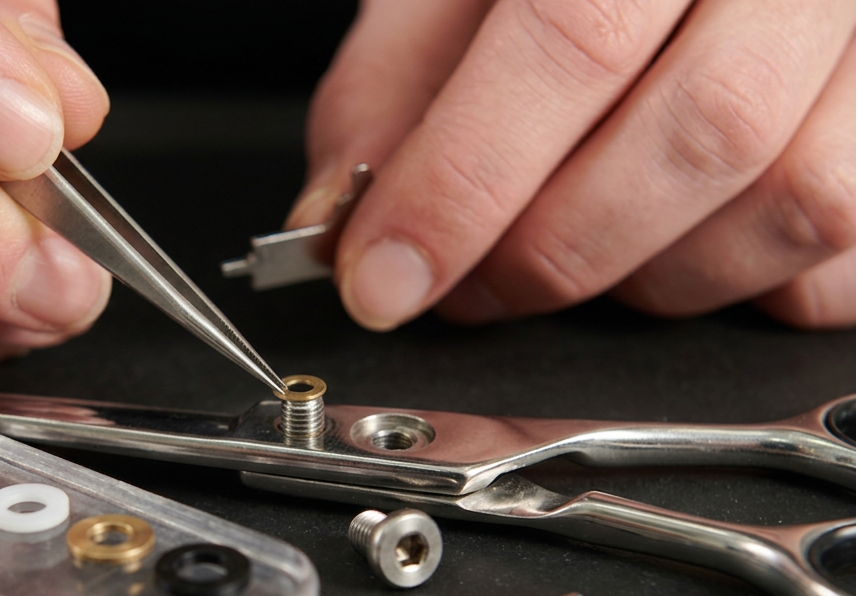
The screw joining the two blades is not merely holding the scissors together. It helps regulate the tension between them.
If the tension is unsuitable, the blades may not work together as intended. If the tension is too loose, or if the blades are not correctly aligned, the scissors may fold or push the hair rather than cutting it cleanly. Excessive tension, on the other hand, can make the scissors harder to operate.
Correct alignment is equally important. Even high-quality blades cannot perform properly if they do not meet in the intended way.
Different Techniques Place Different Demands on the Scissors
A hairdresser rarely performs every part of a haircut with exactly the same movement. Each technique places different demands on the scissors.
Precision and Blunt Cutting
Blunt cutting is used to create a clearly defined edge or a strong, clean shape. The hairdresser needs to follow the intended line accurately and maintain consistency across the section.
Control and stability are particularly important because small irregularities may be visible in the finished outline.
Point Cutting
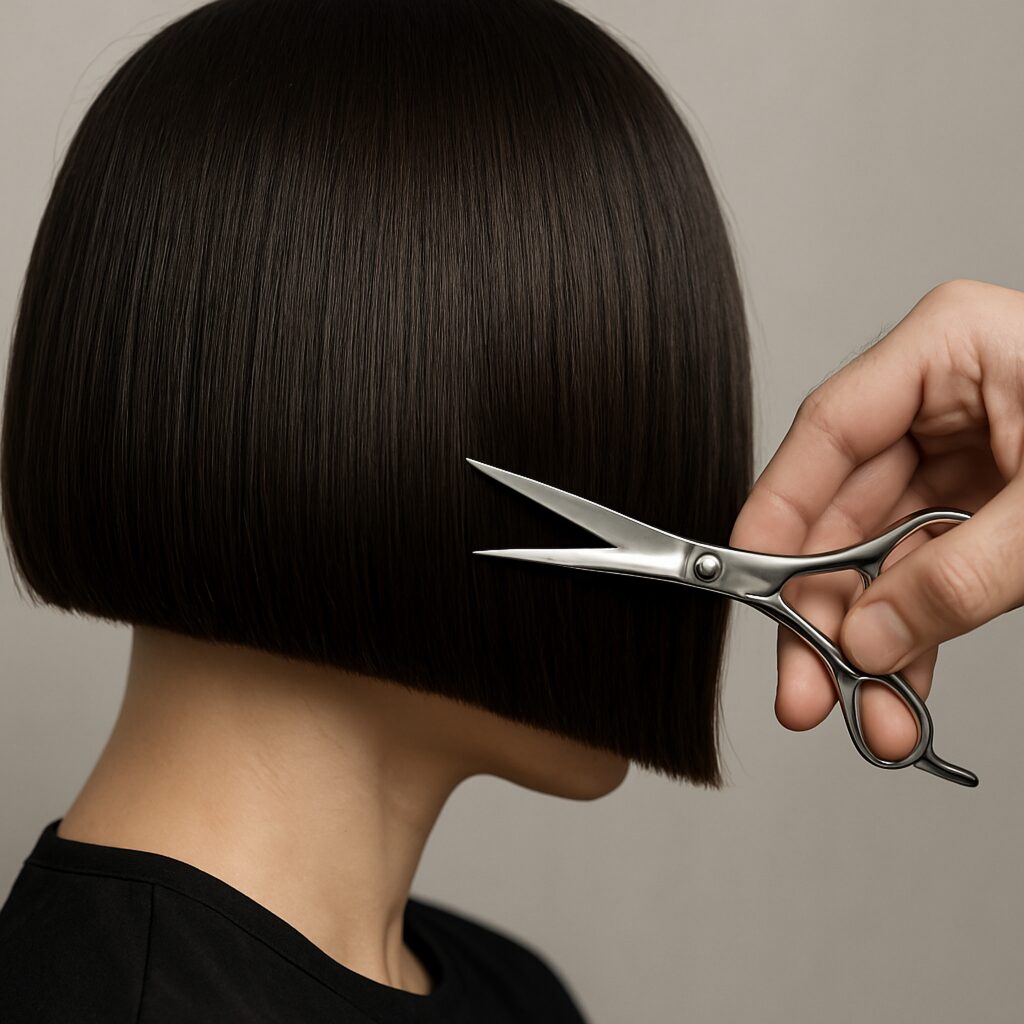
In point cutting, the tips of the scissors enter the ends of the hair rather than cutting straight across them. This can soften a line, remove weight or create separation and texture.
The size of the scissors, the shape of the tips and the hairdresser’s control all affect how precisely this technique can be performed.
Slide Cutting
Slide cutting uses a controlled movement along the hair to create softness, movement or a gradual transition.
This technique requires scissors that move through the hair smoothly and respond predictably to the hairdresser’s hand. It should not be confused with pulling an unsuitable or poorly maintained blade through the hair.
Scissor-Over-Comb
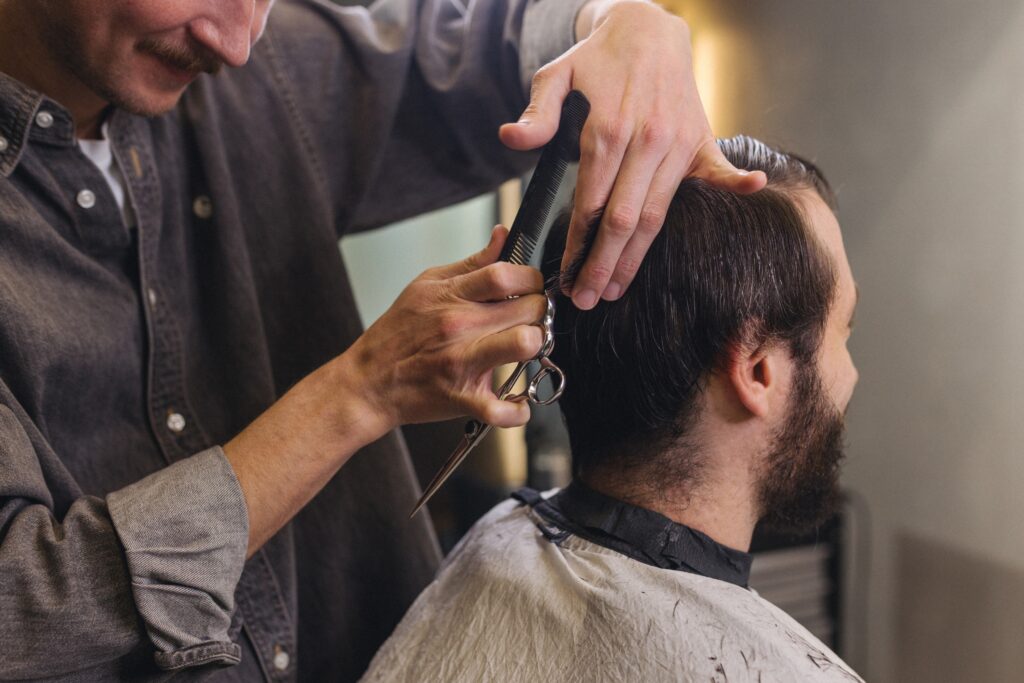
Commonly used in shorter haircuts, scissor-over-comb requires coordination between the comb and scissors. The hairdresser works continuously across the head to refine the shape and blend different lengths.
Longer blades may help cover a wider area, while balance and smooth movement support the repeated cutting action.
Thinning and Texturising
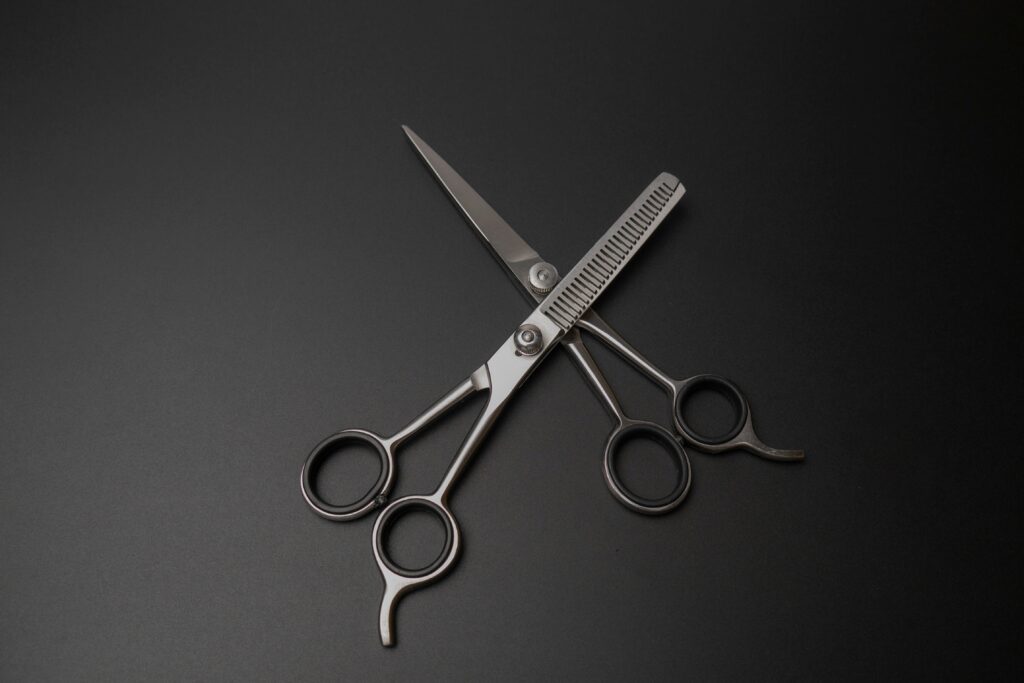
Thinning and texturising scissors do not remove hair in the same way as standard cutting scissors. One or both blades have teeth, allowing the scissors to cut only some of the hairs within a section.
The number, shape and arrangement of the teeth influence how much hair is removed and the type of texture created. Used with judgement, these scissors can reduce bulk, soften transitions or create movement. They are not simply a faster way to cut hair, and unsuitable use can remove more weight or alter the shape more than intended.
These examples show why professional scissors are specialised tools. One pair may be versatile enough for several techniques, but it will not necessarily be ideal for every task.
How the Scissors Affect the Finished Haircut
The quality and condition of the scissors influence how confidently a hairdresser can carry out a technique.
When the blade design, balance and tension are appropriate, the scissors may help the hairdresser:
- follow a line more accurately;
- control how much hair is removed;
- create deliberate texture and movement;
- work smoothly through different sections of the haircut;
- achieve more consistent results; and
- reduce unnecessary strain associated with excessive gripping or resistance.
By contrast, scissors that are poorly aligned, incorrectly tensioned or no longer cutting effectively may push, fold or pull the hair. The hairdresser may then need to repeat the cutting action or compensate with additional pressure.
This does not mean that expensive scissors automatically create better haircuts. A highly priced tool cannot replace training, experience or an understanding of hair.
Nor is one particular scissor suitable for every professional. The value of a pair of scissors lies in how well its design, size, condition and balance match the user and the work it is expected to perform.
Maintenance Is Part of Performance
Professional scissors require ongoing care if they are to continue working as intended.
Hair and product residue should be removed regularly, and the pivot area may require appropriate lubrication. Scissors should also be stored safely to protect the blades from impact.
Sharpening is not simply a matter of making an edge feel sharp again. The original blade shape and angle need to be respected. Inappropriate sharpening can alter the geometry of the blade and change the way the scissors cut.
Regular professional servicing, including inspection of the alignment and tension, is therefore part of maintaining the tool’s performance.
The Tool Supports the Professional
A professional haircut begins with skill.
The hairdresser decides where to create weight, where to remove it, how to build the shape and how the hair should move. The scissors do not make these decisions.
What the right scissors provide is the control needed to carry them out.
They allow the professional’s knowledge and hand movements to be expressed more accurately through the hair. In this sense, professional scissors are not the source of the technique—they are the tool that supports it.
From Professional Scissors to Japanese Craftsmanship
Professional hairdressing scissors bring together multiple elements: blade geometry, steel, balance, handle design, tension, alignment and finishing.
Japanese scissor makers have developed a strong reputation in this field, particularly for their attention to precision, adjustment and hand finishing. However, the label “Made in Japan” alone does not tell us whether a particular pair will be suitable for every hairdresser or every technique.
The more useful questions are:
- How were the scissors designed?
- What kind of cutting are they intended for?
- How are they finished and adjusted?
- How do they feel in the user’s hand?
- What maintenance and aftercare will they require?
These are the questions we will explore as we look more closely at Japanese hairdressing scissors, the makers behind them and the different professional needs their tools are designed to support.
At JLPS, we introduce Japanese craftsmanship and help clients in Europe source Japanese products according to their individual requirements. If you are looking for a particular type of Japanese professional tool, please feel free to contact us.