
When we think about women’s haircuts, length is often the first thing that comes to mind.. Should it be cut to the shoulders? Above the chin? Or should the length be kept almost unchanged? This continued focus on hairstyle design also provides the background for our next article, which will look more closely at Japanese-made hairdressing scissors.
Yet a women’s haircut is about much more than deciding how many centimetres to remove. Even when the overall length stays the same, a haircut can change how the hair falls, where it holds weight and how it moves around the face. It can make thick hair feel lighter, give fine hair a fuller appearance, bring out natural waves or make everyday styling easier.
The difference is created through shape, layers, weight distribution and careful work around the face. These elements help explain why two haircuts of a similar length can look and behave very differently.
One Length, Very Different Result
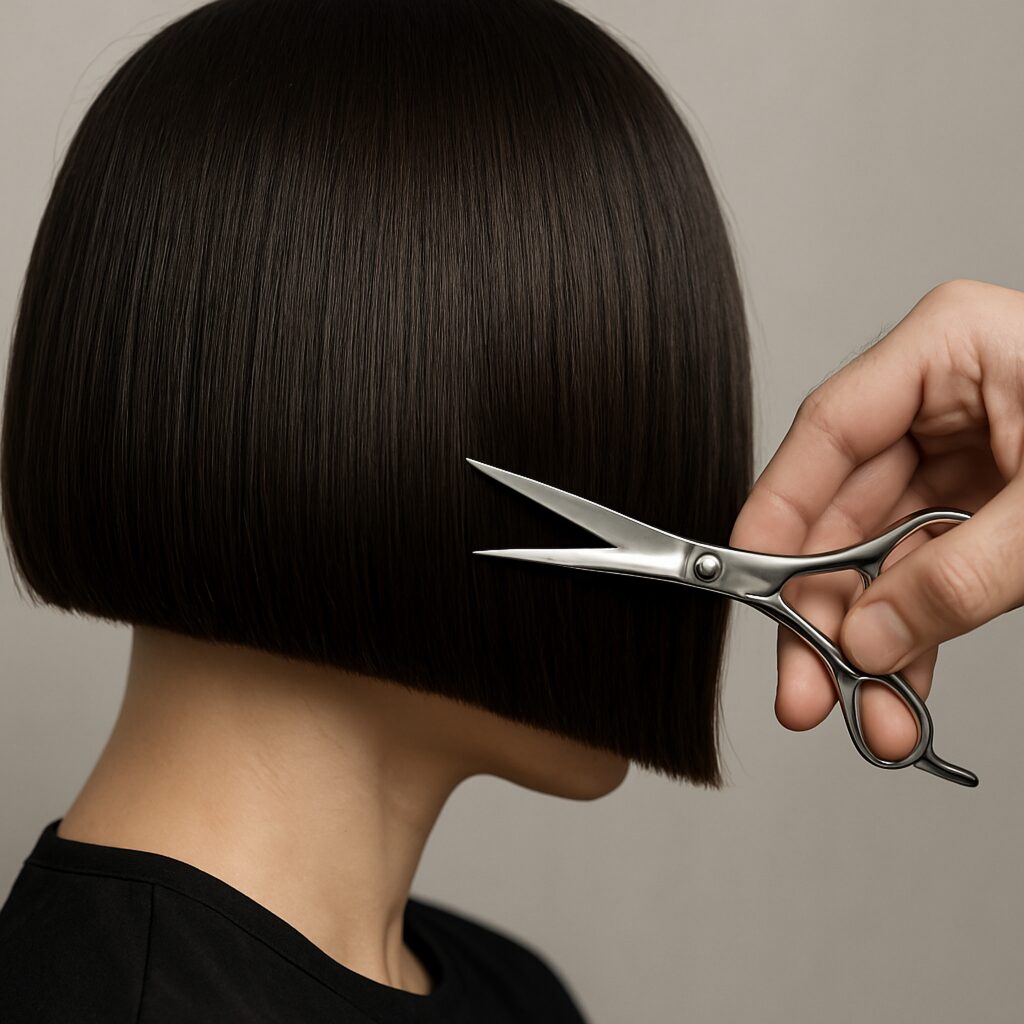
The bob is a good example. It continues to appear in many forms across Europe, from short French bobs to longer lobs and clavicle-length cuts. However, the word “bob” does not describe just one result.
A blunt or precision bob has a clear outline and a sense of weight at the ends. Its clean line can make the hair look polished, strong and visually dense. A softer bob may have subtly layered or textured ends, allowing the hair to move more freely and giving the shape a less rigid appearance.
Both can be cut to approximately the same length, but their balance and character are different. One relies on a strong, accurate line; the other introduces softness and movement. This is why the structure of a haircut matters just as much as its length.
The same applies to medium and long hair. Hair that falls below the shoulders may be cut mainly at one length for a smooth, substantial outline, or it may contain layers that create volume, movement and a lighter silhouette. From the front, face-framing sections can alter the impression again without significantly shortening the rest of the hair.
What Layers Actually Do
Layers are created by cutting different sections of the hair at different lengths. Their purpose is not simply to “make the hair thinner.” Depending on where they are placed and how they are cut, layers can remove weight, create volume, reveal natural texture or change the overall silhouette.
Long layers, for example, can introduce movement while preserving most of the length. Shorter layers around the crown can help create lift and volume in the upper part of the style, while face-framing layers can soften the transition between the front and the longer hair behind it.
The popular butterfly cut demonstrates this well. Its shorter, face-framing layers create volume and movement around the upper part of the hair, while the longer sections underneath retain length. The result can look dramatically different from a one-length cut even though much of the hair remains long.
Layers can also be used more discreetly. A lob or clavicle-length cut may contain only subtle internal layers, designed to release some weight without making the surface look heavily layered. The effect may not be immediately obvious, but it can change the way the hair swings, curls or settles after washing.
The important point is that layering is not one standard technique with one predictable result. It is a way of controlling the relationship between length, volume, weight and movement.
Face-Framing and the Overall Silhouette
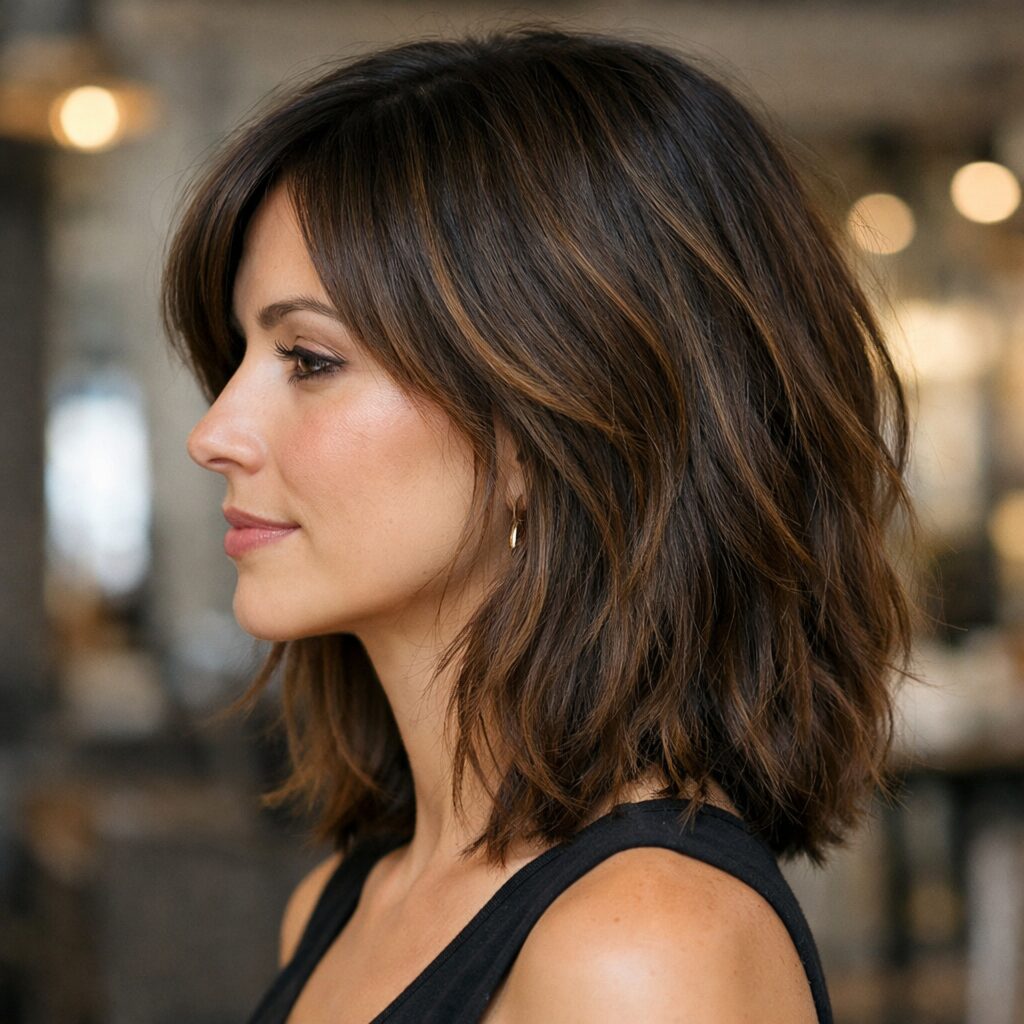
Hair around the face has a particularly strong influence on the impression of a haircut. A fringe, a side-swept section or a few shorter layers near the cheekbones or jaw can change how the front of the style connects with the rest of the hair.
Shorter face-framing layers can create a lighter and more dynamic effect. Longer, softly blended sections may give a calmer and more flowing appearance. A rounded silhouette often feels soft, while a clean geometric outline can look sharper and more structured.
This does not mean that a haircut changes the face itself. Rather, the stylist adjusts the balance between the hair, the face and the overall shape. The best placement depends on the client’s hair texture, density, natural growth pattern and preferred styling routine—not only on a trend photograph.
Different Hair Types Need Different Decisions
The same haircutting method will not produce the same result on every type of hair.
With thick or very dense hair, the stylist may need to remove internal weight so that the shape does not become bulky. With fine hair, removing too much can make the ends look sparse, so maintaining density and a clean outline may be more important.
Straight hair tends to show the cutting line clearly. This makes precision particularly important in styles such as a blunt bob. Wavy and curly hair behave differently: the stylist must consider how much the hair will spring up, expand or change direction when it dries. Removing weight can allow natural curls to form more freely, but excessive thinning can also disturb the curl pattern or create unwanted frizz.
For this reason, a fashionable haircut is rarely copied in exactly the same way from one person to another. Its length, layers and weight distribution need to be adapted to the individual hair.
Layers and Point Cutting Are Not the Same Thing
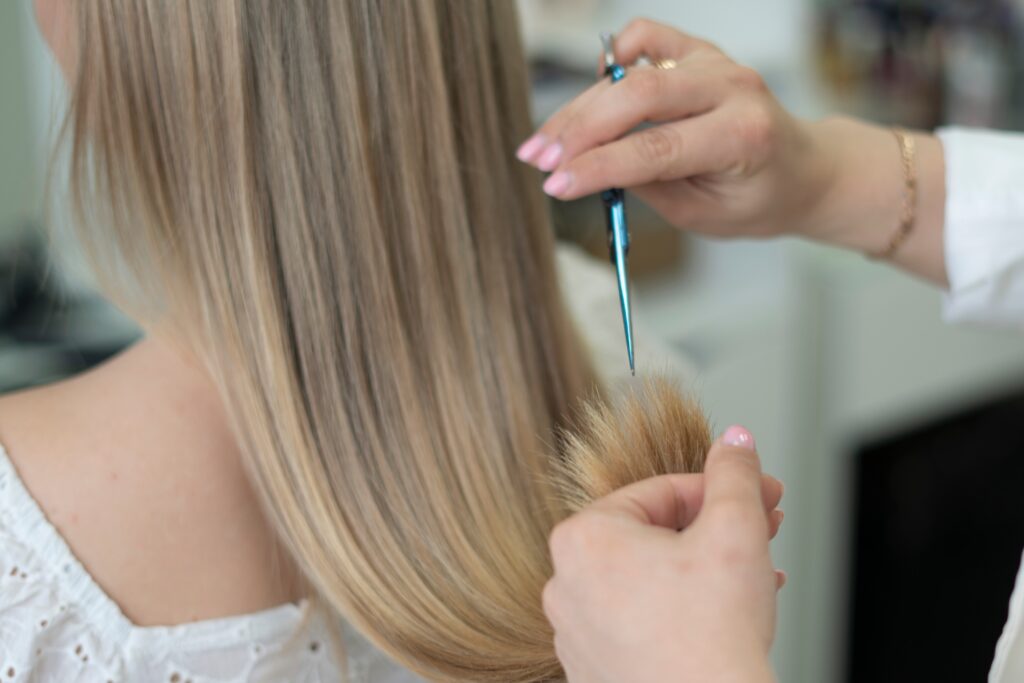
When watching a haircut, you may notice a stylist holding a section of hair and cutting into the ends with the scissors positioned vertically or diagonally. This is often called point cutting.
Point cutting is frequently used in a layered haircut, but it is not usually what creates the main structure of the layers. The basic layered shape is formed by dividing the hair into sections, lifting those sections at selected angles and cutting them to planned lengths. Point cutting can then be used to refine that structure.
By cutting into the ends rather than straight across them, the stylist can soften a hard line, remove small amounts of weight and help neighbouring sections blend more naturally. A shallow point cut may gently soften the tips, while a deeper point cut can remove more weight and create stronger separation.
This also explains why a stylist may appear to use the same pair of cutting scissors throughout the appointment. Professional cutting scissors can create the main shape and layers, then be used for point cutting, slicing or other texturising techniques. A separate pair of thinning scissors is not essential for every haircut.
Where Thinning and Texturising Scissors Fit In
Thinning scissors typically have one toothed blade and one straight blade, although some designs have teeth on both blades. They remove only part of the hair in each section. They can be used to reduce bulk, soften a visible line or blend one area into another. Texturising scissors may have fewer or more widely spaced teeth and can create more noticeable separation and movement. In practice, the terms thinning, texturising and blending scissors are sometimes used differently by different brands and hairdressers.
These tools are commonly available to European hairdressers, but that does not mean they are used for every client or every style. A stylist may avoid them when a blunt, dense outline is required, when the hair is fine, or when thinning could cause curly or wavy hair to become frizzy. Another stylist may prefer to control the result with point cutting or slicing using ordinary cutting scissors.
The choice is therefore not determined simply by whether the hair is thick, dense or fine. It depends on how much hair the tool removes, where it is used and what kind of finish the stylist wants to create.
Why Precision and the Right Tools Matter
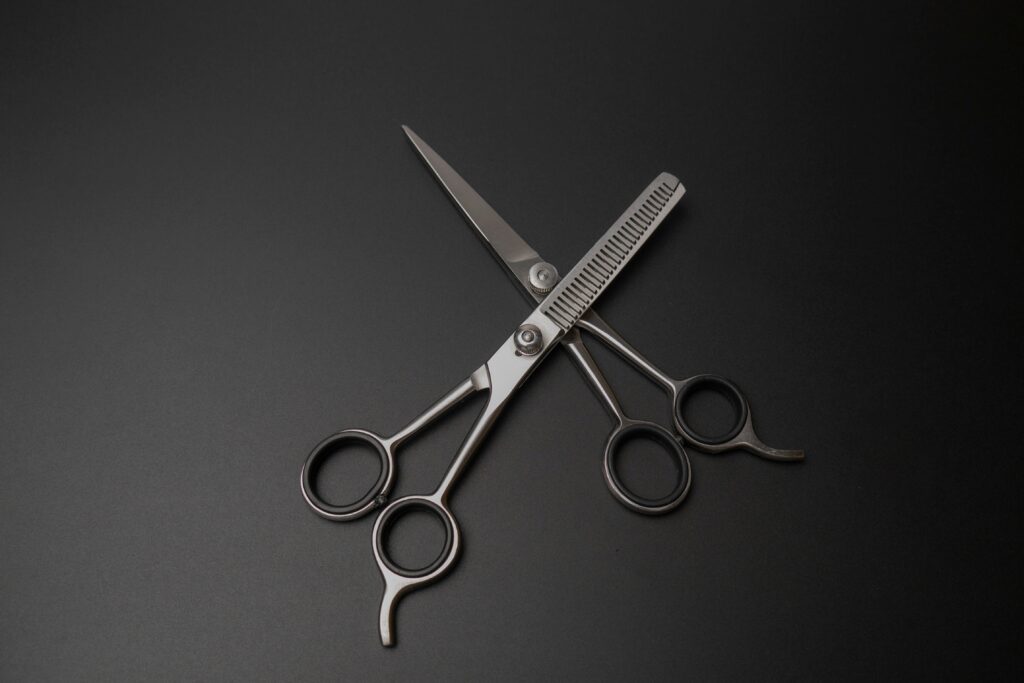
A professional haircut combines technical planning with many small decisions. The stylist considers where to preserve weight, where to release it, how the hair should move and how the finished shape will behave outside the salon.
A clean bob requires an accurate cutting line. Soft layers need controlled transitions. Point cutting requires the stylist to place the tips of the blades precisely, while thinning and texturising scissors must remove an appropriate amount of hair without leaving obvious marks or damaging the intended shape.
Technique remains central, but the condition, sharpness, balance and design of the scissors also affect how comfortably and accurately that technique can be performed. The right tool is not necessarily the one that removes the most hair or creates the most dramatic effect. It is the one that gives the stylist the control needed for the client’s hair and the intended result.
A future article will look more closely at professional cutting, thinning and texturising scissors—including how their blade design, tooth pattern and cut ratio influence the finish.