
Today, Japanese hairdressing scissors are highly specialised professional tools. Their blade shape, balance, handle design and tension can all affect how comfortably and accurately a hairdresser works.
However, the scissors used in modern Japanese salons did not develop in isolation. Their history is closely connected with changes in Japanese hairstyles, the arrival of Western-style barbering and the development of hair cutting as a professional skill.
Scissors Before Modern Hair Salons
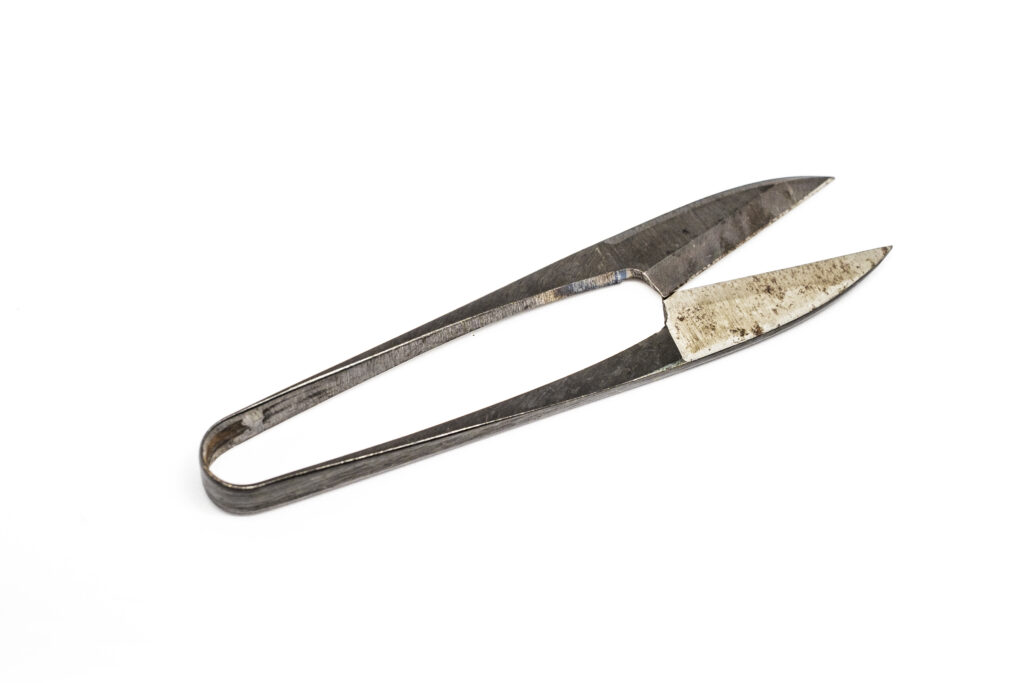
Long before Western-style scissors became common in Japan, people used a traditional form of scissors known as nigiri-basami.
Unlike modern scissors, which consist of two blades joined by a central pivot, nigiri-basami are made from a single piece of metal bent into a U-shape. The blades open through the spring of the metal and close when pressed together by hand.
These scissors were mainly used for cutting thread, fabric and other materials in sewing and traditional handwork. They remain familiar in Japan today, particularly as small thread-cutting scissors.
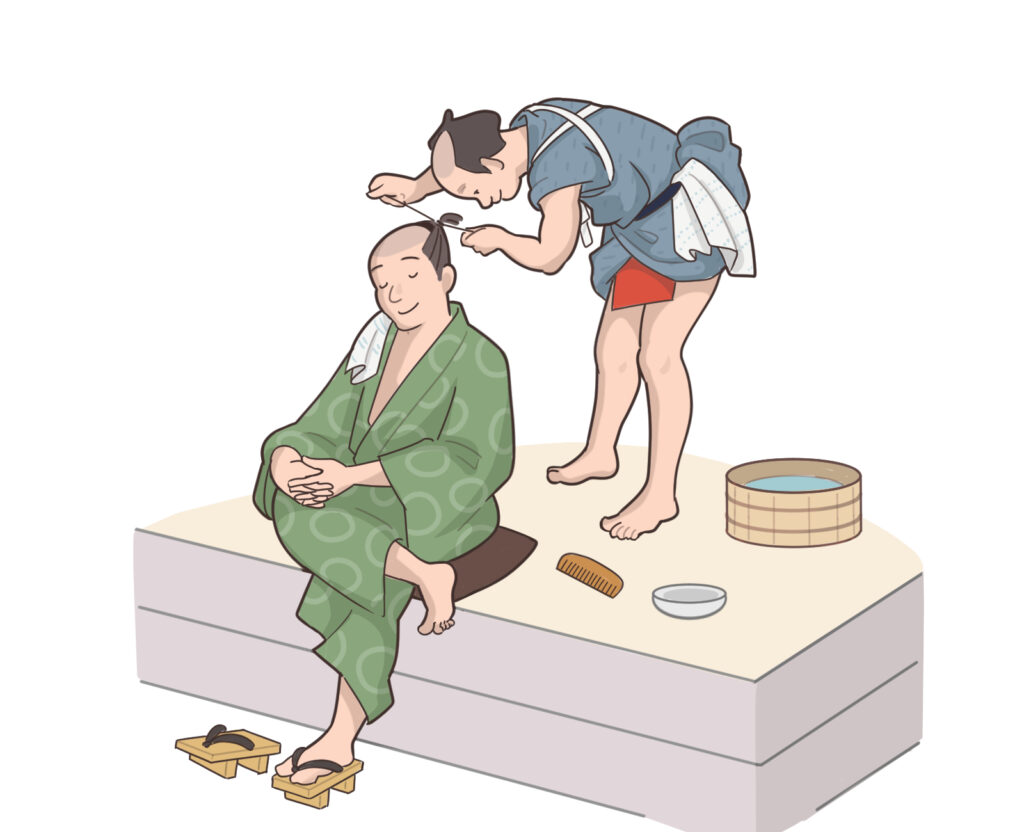
Hair care in pre-modern Japan was organised very differently from that of a modern salon. During the Edo period, professional hairdressers known as kamiyui cut, shaved, arranged and maintained the elaborate hairstyles worn by samurai and townspeople. Men’s hairdressing establishments, sometimes called kamiyuidoko, are among the historical predecessors of the Japanese barbershop.
The work of these specialists was primarily concerned with shaving, arranging and tying the hair into established forms. The idea of creating a hairstyle by precisely shaping loose hair with professional scissors had not yet become central to the occupation.
The Arrival of Western-Style Scissors
Western-style scissors operate through two separate blades joined at a central pivot. This X-shaped construction allows the blades to move against each other in a controlled cutting action.
Scissors of this form were not entirely unknown in Japan before the modern era. The Shōsōin Repository in Nara preserves an eighth-century pair known as Hakudō no Senshi. Made from a copper alloy, these pivoted scissors are believed to have been used for trimming the burnt wick of an oil lamp. Their survival shows that X-shaped scissors had already reached Japan by the Nara period.
Pivoted European scissors were introduced again in the sixteenth century, when Portuguese traders brought new objects and technologies to Japan. They did not, however, replace the U-shaped scissors used in daily life. Historical accounts suggest that pivoted scissors remained uncommon and were mainly associated with specialist work, including horticulture and medical treatment.
For most people in Japan, U-shaped scissors—generally known as nigiri-basami or traditional Japanese grip scissors—remained the more familiar form throughout the Edo period. They were particularly suited to cutting thread and fabric and continued to be widely used in sewing and other forms of handwork.
It was only during the Meiji period, when Japan was rapidly adopting Western technologies, clothing and customs, that pivoted scissors began to spread more widely. The change was particularly significant for hairdressing. Western barbering required tools suited to cutting short, untied hair, including clippers, razors and pivoted scissors.
Accounts preserved within Japan’s barbering industry commonly associate the arrival of Western barbering scissors in the early Meiji period with a Frenchman referred to as Corte.
The surviving accounts do not provide a complete picture of the earliest imports, so details such as the exact date and Corte’s role should be treated with some caution. What is well established is that imported Western barbering tools became models for the first generations of Japanese-made professional scissors.
A New Hairstyle for a Changing Japan
In 1871, the Meiji government issued an order commonly known as the danpatsurei, or Haircutting Edict.
Despite its familiar name, the order did not require every Japanese man to cut his hair. It officially gave people the freedom to cut off their traditional topknots and adopt Western-style hair and dress, although social and local pressure later encouraged many men to do so.
Cutting off the topknot gradually became a visible symbol of Japan’s modernisation.
As short hair spread, new styles appeared. Historical records from the early Meiji period mention cuts such as the gobugari, a closely cropped style; the nade-tsuke, in which the hair was brushed back; and divided or side-parted styles called wakegari.
Western-style barbershops also began to open in port cities and other urban areas. These establishments were different from the earlier kamiyui businesses because their work increasingly involved cutting and shaping the hair rather than mainly shaving, arranging and tying it.
The transformation of hairstyles therefore created demand not only for new skills, but also for new tools.
Scissors Become a Professional Tool
At first, Japan depended on imported barbering equipment. Supply could not always keep pace with the rapid expansion of Western-style barbering, and Japanese metalworkers began reproducing imported scissors.
Tomono Yoshikuni is widely described within the Japanese barbering trade as a pioneer of domestically produced barber scissors. Tateno Heisaku was another important early maker.
Tomono’s scissors included a thin, broad-bladed form known as the tanago-gata. One recorded example had a blade length of approximately 15 centimetres, measured about 2.1 centimetres at its widest point and weighed roughly 180 grams. Compared with many professional scissors used today, it would have been a remarkably large and heavy tool.
Other makers followed during the Taishō and early Shōwa periods. Scissors made by Kōno Yaichi and the large scissors associated with Shōji became particularly well known.
Specialist manufacturers also began to emerge. Tōkōsha, now known internationally through its Joewell brand, was founded in 1917 as a manufacturer of medical scissors. In 1921, it began producing and selling barber scissors under its Niwatori brand.
This development demonstrates that Japanese professional scissors did not emerge from a single tradition. They were shaped by imported Western designs, Japan’s existing metalworking knowledge, experience in producing medical instruments and the practical demands of working barbers.
The Professionalisation of Hairdressing
During the early twentieth century, barbering and women’s hairdressing became increasingly organised occupations. Training institutions expanded, techniques were systematised and greater attention was paid to hygiene and professional standards.
Japan’s Barbers Act was enacted in 1947. The Beauticians Act followed in 1957, establishing separate national qualifications for barbers and beauticians.
These laws did not directly determine the design of scissors. They do, however, reflect the growing regulation and professionalisation of work that had long been taught largely through apprenticeship and practical experience.
As haircutting methods became more sophisticated, hairdressers needed scissors that could offer greater accuracy, consistency and comfort over many hours of use.
A New Approach to Cutting Hair
One of the most influential changes in modern haircutting came from British hairdresser Vidal Sassoon.
From the 1950s, and especially during the 1960s, Sassoon developed a disciplined approach based on strong lines, geometric shapes, the client’s bone structure and the natural movement of the hair. His work included the famous Five Point Cut and a series of sharply defined bobs and short styles.
It would be misleading to say that Sassoon invented cutting hair with scissors. Scissors had already been used professionally for a long time. Nor did he simply replace razor cutting with scissor cutting.
His greater innovation was to make the precision haircut itself the foundation of the finished style.
Before this change, women’s hairstyles often depended heavily on rollers, backcombing, setting and hairspray. Sassoon created shapes through the cut so that the hair could move naturally and require less elaborate daily styling.
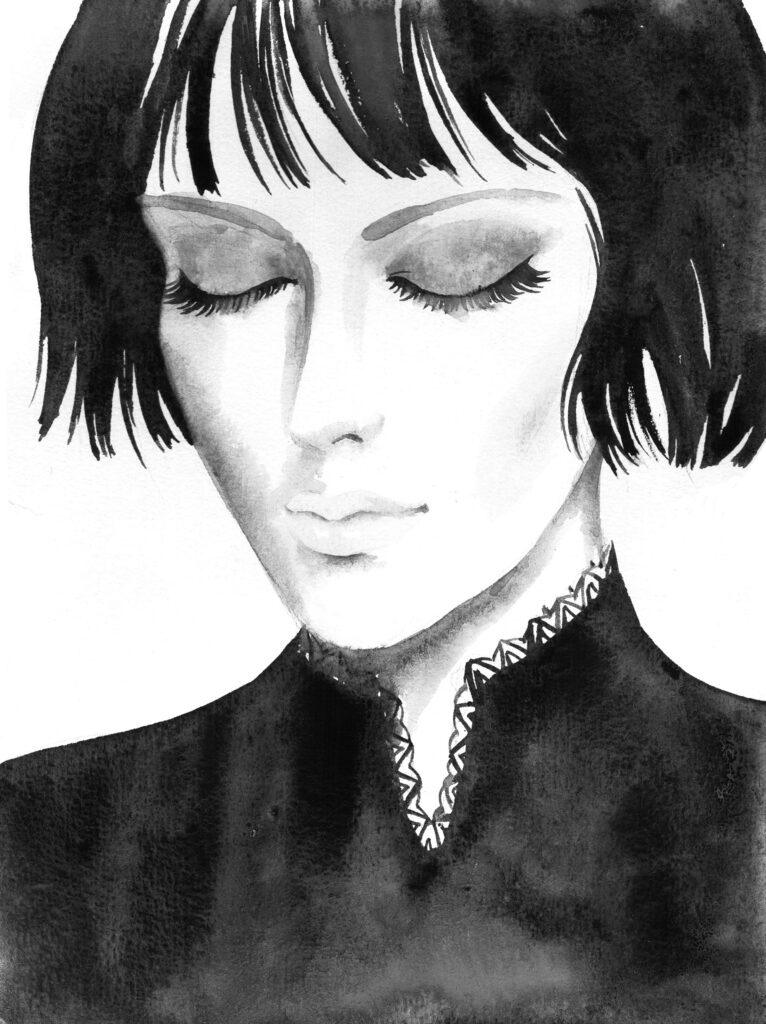
Sassoon’s approach gained a strong following among Japanese hairdressers during the 1970s and continued to influence salon education and cutting practice in the decades that followed.
Razor cutting did not disappear, and it remains a useful technique for creating softness, texture and movement. However, the increasing importance of precise scissor cutting raised expectations for the tools themselves.
A clean line could expose even a slight inconsistency in cutting. The scissors therefore needed to respond predictably to the hairdresser’s hand. As explored in our articles on men’s hairstyles and women’s haircutting techniques, shape, texture and movement all depend on how the hair is cut.
Made for the Hairdresser’s Hand
At first glance, professional hairdressing scissors may resemble ordinary household scissors, but their design reflects the specialised demands of salon work.
The length and shape of the blade affect the type of cutting for which the scissors are best suited. Shorter scissors can offer detailed control, while longer blades may help create straight lines or cut larger sections of hair.
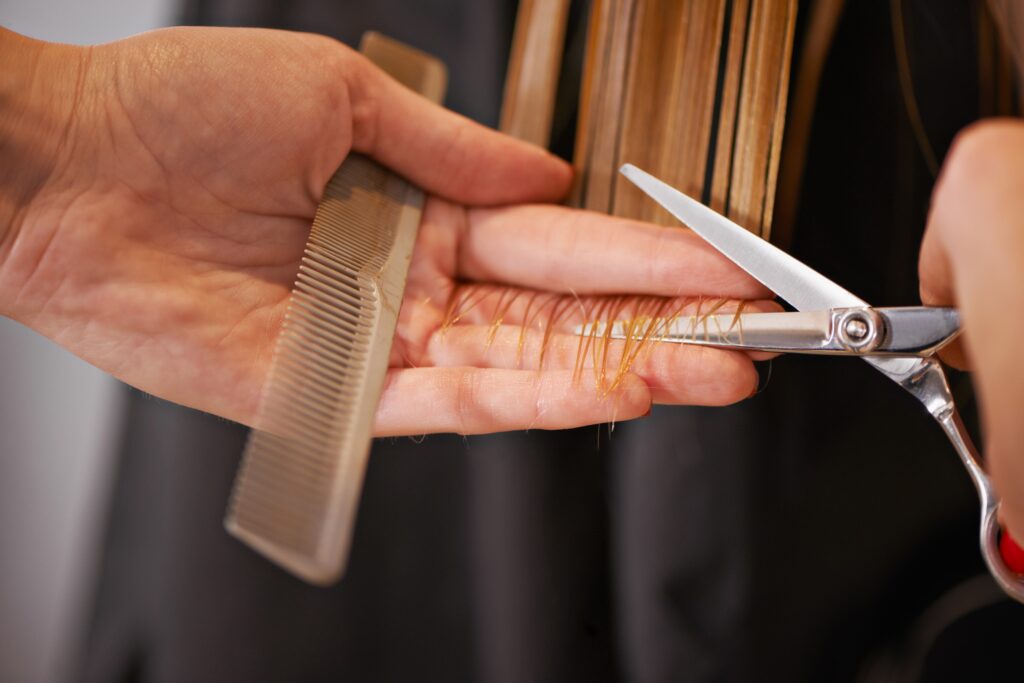
The handles also matter. Symmetrical, offset and crane-style handles position the fingers, wrist and elbow differently. A finger rest can provide additional stability, while finger-ring inserts allow the handle to be adapted to the user’s hand.
At the centre of the scissors, the pivot and tension system determine how the two blades move together. If the tension is too loose, the hair may fold, bend or slide between the blades. If it is too tight, the scissors can become tiring to operate and may experience unnecessary wear.
Most importantly, the two blades must meet correctly along the cutting edge. Scissors do not cut simply because each individual blade is sharp. They cut because the blades move against one another with precisely controlled contact.
Balance, tension, edge shape and blade alignment must therefore work together.
Precision Still Finished by Hand
Modern manufacturing has brought advanced steels, computer-controlled machinery and highly consistent production methods to the scissor industry.
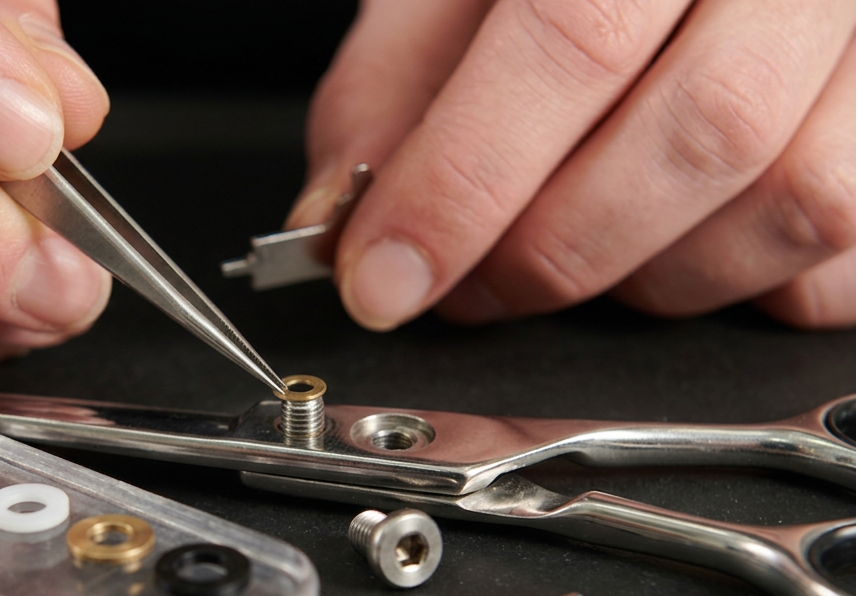
Nevertheless, the final performance of professional scissors still depends on extremely fine adjustments.
Sharpening the cutting edges, setting the tension, checking the movement of the blades and adjusting how they make contact all require judgement that cannot be reduced to measurements alone. Experienced craftspeople listen to the sound of the scissors, feel the resistance in their movement and examine the result of the cut.
Japan’s long traditions of blade-making, metalworking, grinding and polishing provided an important technical foundation for this development. However, professional scissor production should not be understood simply as a direct continuation of Japanese sword-making.
Modern Japanese hairdressing scissors are the result of several influences: Western scissor construction, Japanese metalworking, medical-instrument manufacturing and continuous feedback from professional users.
Close communication between professional users and makers has also helped manufacturers understand the small differences that affect performance in everyday salon work.
Over time, those accumulated adjustments contributed to the reputation Japanese professional scissors have today for sharpness, balance and detailed finishing.
What Comes Next
The history of Japanese hairdressing scissors is about much more than a metal tool.
It reflects a much larger transformation: from the kamiyui who maintained traditional hairstyles, to Meiji-period barbers cutting newly shortened hair, and finally to modern professionals creating carefully designed shapes, textures and movement.
As haircutting became more precise, the relationship between the hairdresser and the scissors became increasingly important.
But how different are professional hairdressing scissors from ordinary scissors? And how can the quality, design and condition of a pair of scissors affect the hair itself?
In our next article, “Why Professional Hairdressing Scissors Matter,” we will look more closely at what happens at the cutting edge—and why the right tool matters to both the hairdresser and the client.